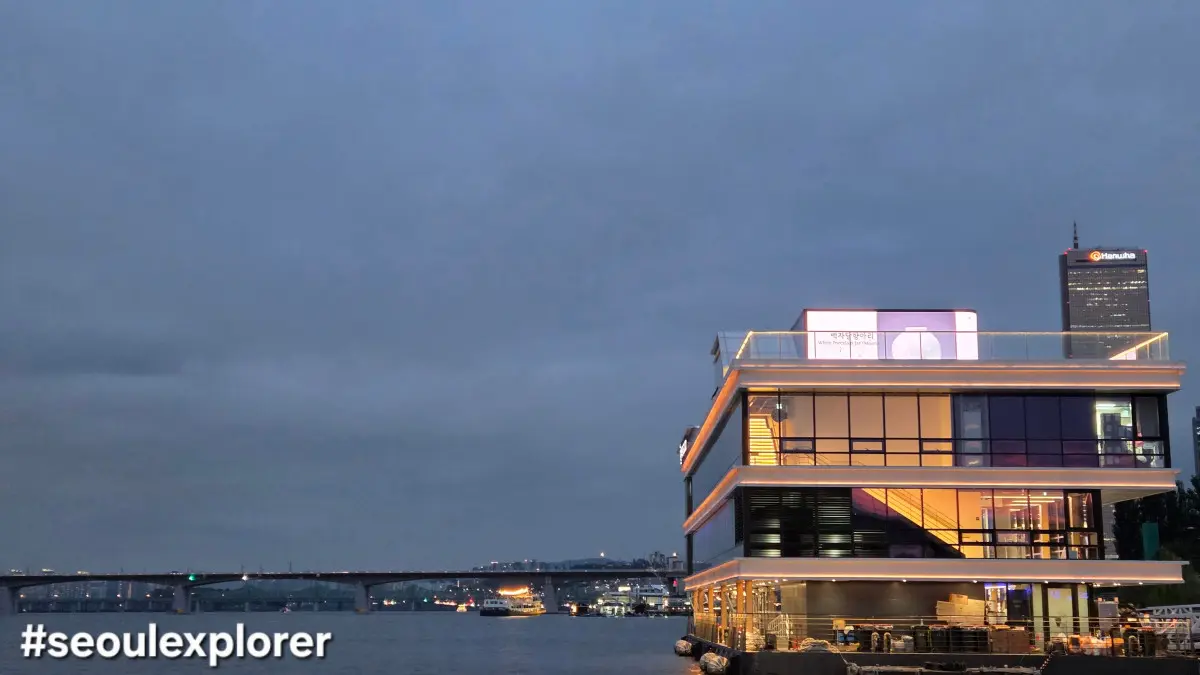
Imagine stepping out of Yeouinaru Station Exit 2 and being greeted not just by the river breeze, but by a tidal wave of people and hundreds of delivery motorcycles swarming around a single point. This is Yeouido Hangang Park Delivery Zone 1, the busiest food exchange on the planet. For a traveler, it’s intimidating. You’ve ordered your food, but looking at the sea of identical delivery boxes, you start to wonder: “Will I ever actually eat my chicken?”
As a Seoul native who has spent half my life picnicking on these grass fields, I can tell you that getting your food isn’t about luck—it’s about strategy. This isn’t your typical “how to use a delivery app” guide. This is a survival manual for mastering the high-stakes world of Yeouido Hangang Park Delivery, ensuring you rescue your meal from the crowd and enjoy it like a true local without breaking any unspoken social rules.
Before you even step out of Yeouinaru Station (Line 5), make sure your transportation card is ready. If you’re not sure how to top up, check my guide on [How to Buy and Use a T-Money Card] to avoid any trouble at the ticket gates.
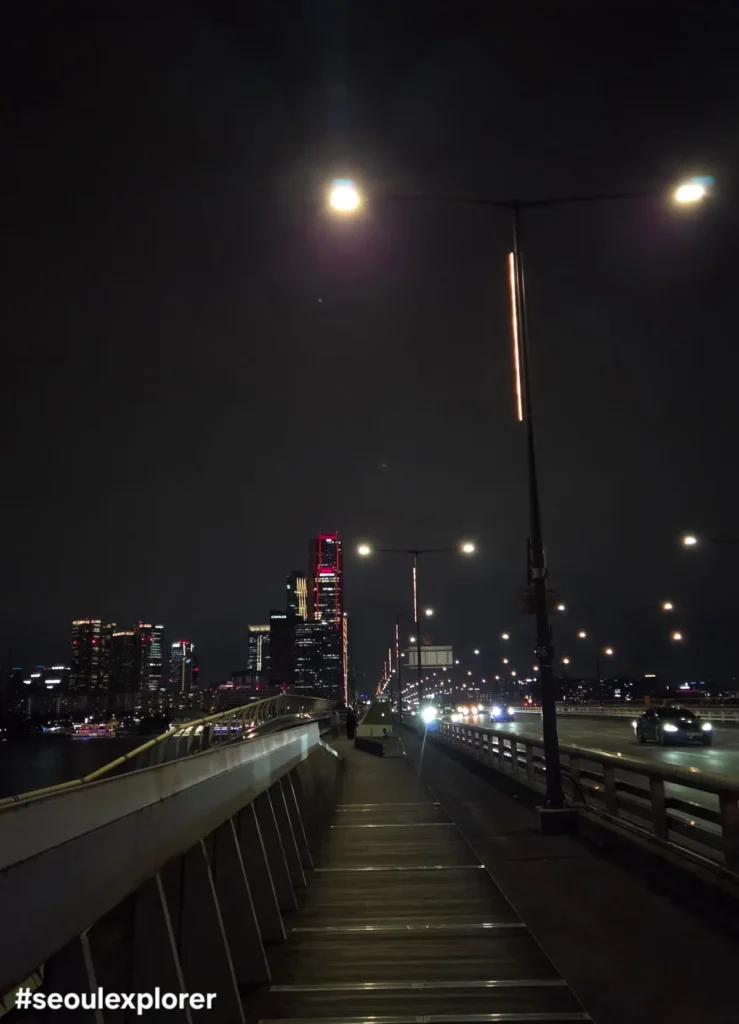
The Great Chicken Rescue: Reclaiming Your Meal in a Crowd of 1,000
Once you hit ‘order’ on an app or through a service, the clock starts ticking. At Yeouido Hangang Park Delivery Zone 1, dozens of riders arrive every minute. If you just stand there looking lost, your food might sit on a stone wall getting cold, or worse, be handed to someone else by mistake.
The “Nickname” Strategy: Why ‘John’ is a Bad Idea
When the app asks for a nickname or “request to rider,” most foreigners put their real name. But in the chaos of a thousand people, a name means nothing. Instead, use your visual identity. Change your nickname to something like “Yellow T-shirt near the sign” or “Person with the Blue Mat.” This allows the rider to scan the crowd and lock eyes with you instantly.
The “4-Digit” Secret: Identify the License Plate
Every delivery motorcycle in Korea has a license plate. In your delivery app, you can often see the rider’s vehicle number. Don’t look at the rider’s face; look at the last four digits of the plate. When you see those numbers pull up to Delivery Zone 1, walk toward them confidently. It saves the rider time and proves you are the rightful owner of that crispy fried chicken.
Communication Hacks: The Language of the Han River
The biggest fear for international visitors is the dreaded phone call. Most riders don’t speak fluent English, and they are in a rush. If your phone rings and you hear “Eodi-se-yo?” (Where are you?), don’t panic.
- The “Magic Sentence”
- You only need one sentence: “Delivery Zone One-e isseoyo!” (I am at Delivery Zone 1).
- Even better, stand right under the massive “Delivery Zone 1” sign and wave your phone like a beacon. The combination of the sign and your frantic waving is a universal language that every Korean delivery rider understands. Remember, they want to give you the food as much as you want to eat it. Be the most visible person in the zone.
- You only need one sentence: “Delivery Zone One-e isseoyo!” (I am at Delivery Zone 1).
Note: If you’re feeling a bit nervous about speaking to the rider, don’t worry—it’s much simpler than it sounds. For more tips on handling similar situations and mastering the art of ordering without any stress, take a look at my guide on [How to Order Food in Korea Like a Local] to boost your confidence!
The Invisible Line: Mastering Han River Social Etiquette
In Seoul, we love our personal space, even in a crowded park. There is an “invisible line” that locals respect when laying down their picnic mats. If you break this, you might get some uncomfortable side-eyes.
Respect the "Mat Gap"

When you find a spot on the grass, don't place your mat right against someone else's. Even a 30cm (1 foot) gap makes a huge difference. Koreans view the picnic mat as a temporary "private room." Stepping on the corner of someone else's mat is considered as rude as walking into someone's house with your shoes on.
Visual Boundaries

Locals often place their shoes or a small bag at the corners of their mat. This isn't just to keep the wind from blowing the mat away; it's a visual boundary marker. Respect these boundaries, and you'll find that the atmosphere remains peaceful and welcoming.
The invisible boundaries on the grass are just one part of Korean culture. If you’re worried about making other social mistakes during your stay, take a look at [Don’t Be Rude! The Perfect Guide to Korean Dining Etiquette] to master the local manners.
The “Ramen Machine” Ritual at Yeouido
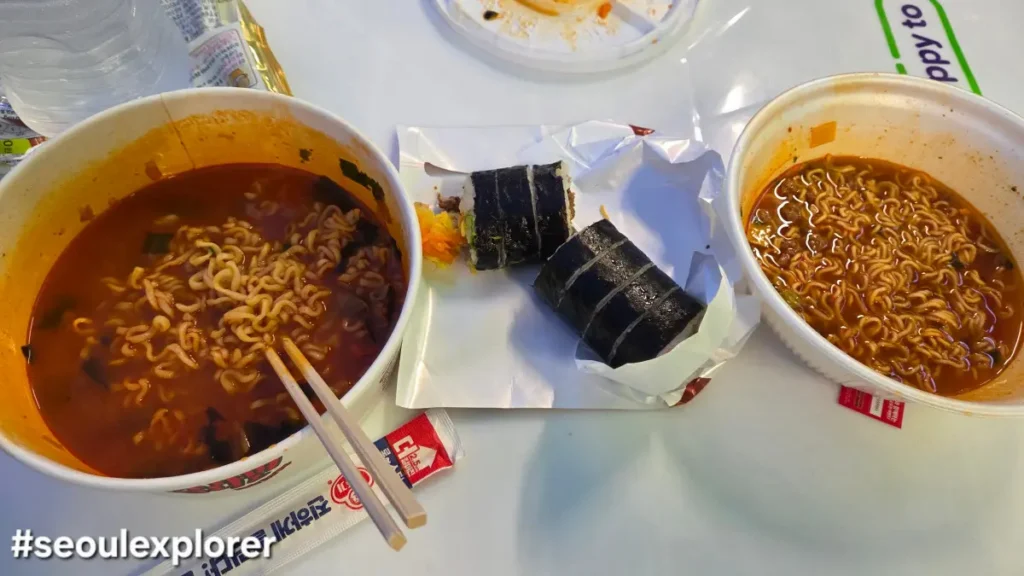
While waiting for your Yeouido Hangang Park Delivery, you’ll likely head to the convenience store for the famous “Hangang Ramen.” But at Delivery Zone 1, the nearest store is notoriously crowded.
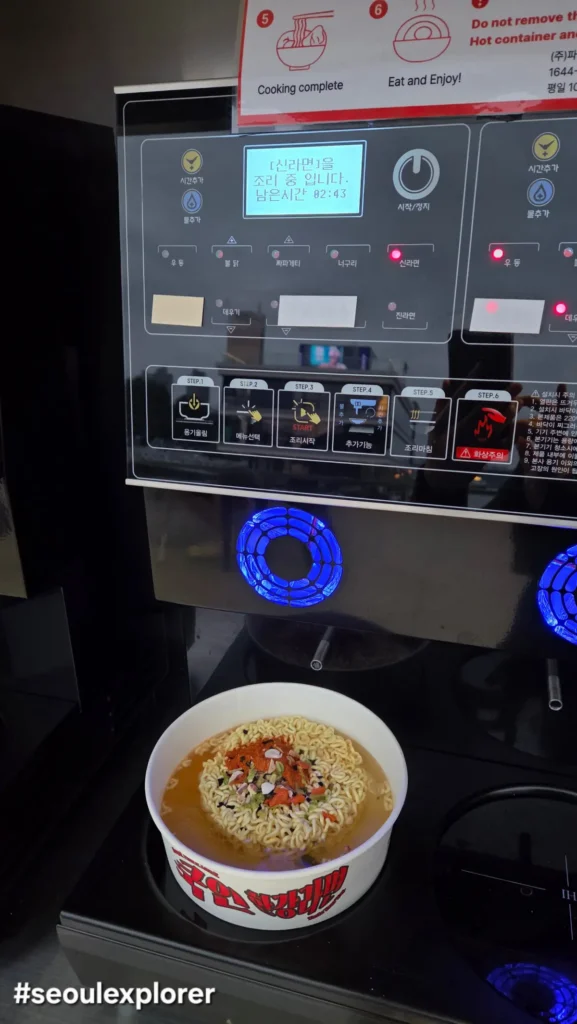
Local Pro Tip: Don’t go to the first convenience store you see near the station exit. Walk 5 minutes further into the park toward the water. The lines for the automated ramen machines are often 50% shorter there. When using the machine, remember the “Goldilocks Rule”: only press the water button once. If you add too much water, the spicy broth loses its soul, and the locals will know you’re an amateur!
Renting mats and buying picnic snacks can add up. For more ways to keep your travel budget under control while exploring the city, check out my guide on [How to Save Money in Seoul].
After refueling with a delicious Han River meal, you’ll probably have the energy for some serious shopping. If your next stop is Myeongdong to pick up some skincare essentials, don’t forget to check out [The Real Olive Young Shopping List] so you don’t waste time in those massive flagship store lines!
The “Real” Trash Etiquette: Don’t Be That Tourist
The most common mistake travelers make at Yeouido Hangang Park Delivery Zone 1 is at the end of the night. You’ll see massive trash mountains, and it looks like chaos, but there is a very strict system.
- The Ramen Broth Problem
Never, ever throw a cup of ramen with leftover broth into the general trash bin. This is the ultimate “tourist sin.” There are specific large buckets (usually red or blue) specifically for food waste (soup). Pour the liquid there first, then stack the paper cups.
- The 3-Way Split
- Food Waste: Leftover chicken bones and ramen soup.
- Recyclables: Plastic containers and beer cans (must be empty).
- General Waste: Napkins and wooden chopsticks.
- Food Waste: Leftover chicken bones and ramen soup.
If you follow this, you aren’t just a tourist; you are a “Seoul Mate” who respects the city’s heart.
Mastering a Yeouido Hangang Park Delivery is more than just getting a meal; it’s a rite of passage for anyone living in or visiting Seoul. By knowing how to identify your rider, where to stand, and how to respect the local etiquette, you’ve turned a potentially stressful situation into a legendary memory.
Next time you see a group of tourists looking confused at the delivery zone, give them a nod—or better yet, show them where the license plate number is. You’ve earned your place on the Han River grass. Enjoy your Chimaek, take in the sunset, and celebrate your successful “Chicken Rescue.”
- Seoul Cherry Blossom Festival 2026: 6 Best Spots to Visit
- Locals’ Secret: Best Places to Eat in Yeonnam-dong (Pasta & Bakeries 2026)
- Pawinhand: The Most Heartwarming Rescue Dog Cafe in Seoul (2026)
- Seoul Temple Stay in 2 Hours: 3 Best Spots for Busy Travelers (2026)
- Seoul Hiking Guide 2026: Rent Gear & Best Local Trails