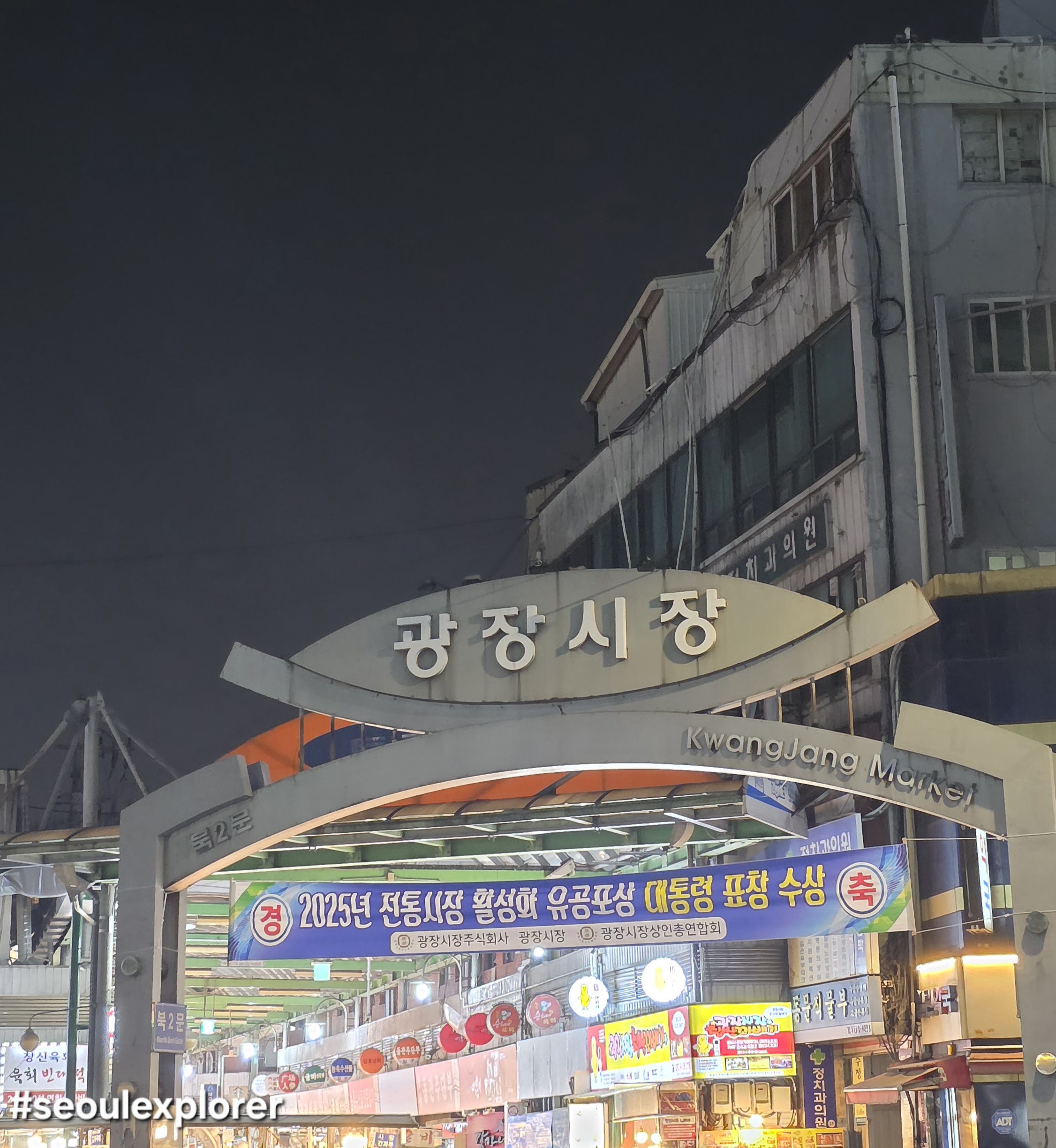
If there’s one place in Seoul where you can truly feel the “living energy” of the city, it’s Gwangjang Market. Established in 1905, it is Korea’s first permanent market and has evolved into a global culinary landmark. While it’s famous for its traditional silk and vintage clothing, most travelers visit for the legendary street food. Today, I’ll take you through a perfect food tour of Gwangjang Market, featuring both time-honored classics and the latest trendy spots.
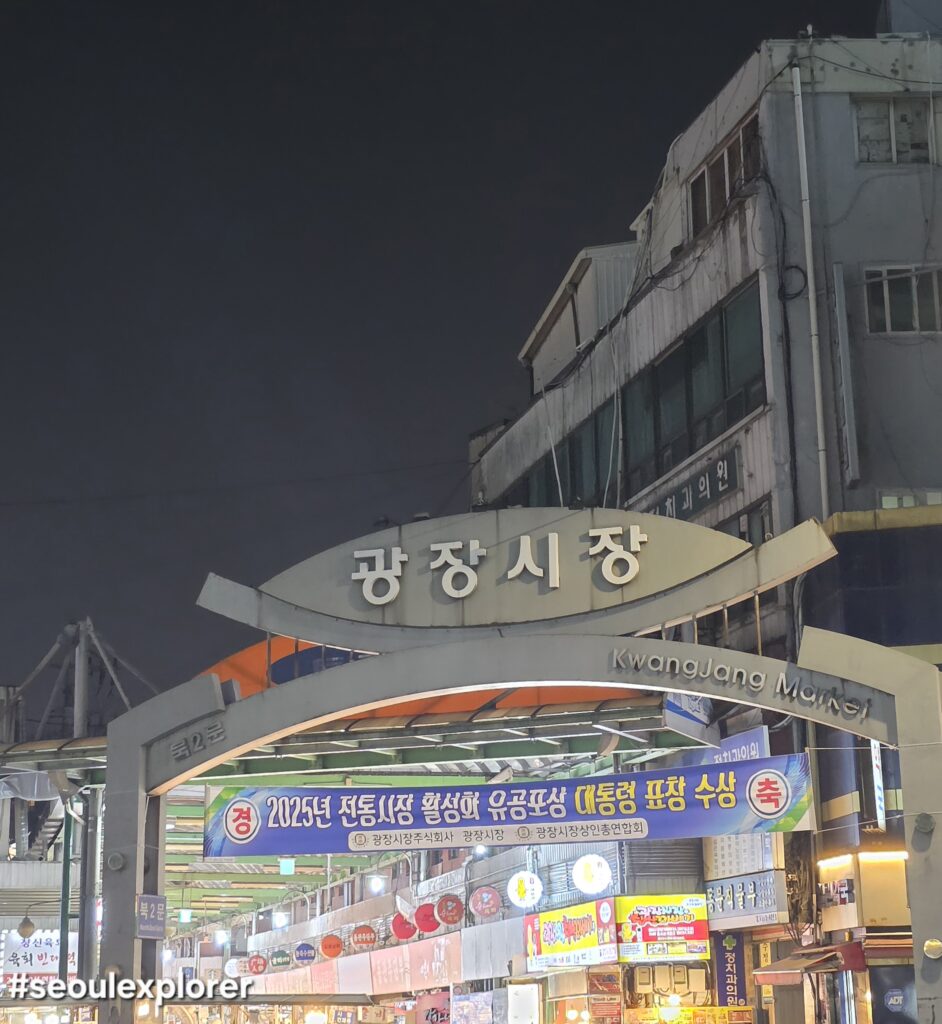
The Gateway to Food Heaven: Entering the Gwangjang Market
As soon as you walk through the Gwangjang Market Entrance, you are greeted by a wall of savory smells. The sound of sizzling oil and the sight of steam rising from giant pots create an overwhelming sense of excitement. It’s a maze of flavors where every alley offers something new. Remember to use your Climate Card to get off at Jongno 5-ga Station (Exit 8) for the easiest access.
The Golden Standard: Soonhee’s Bindaetteok
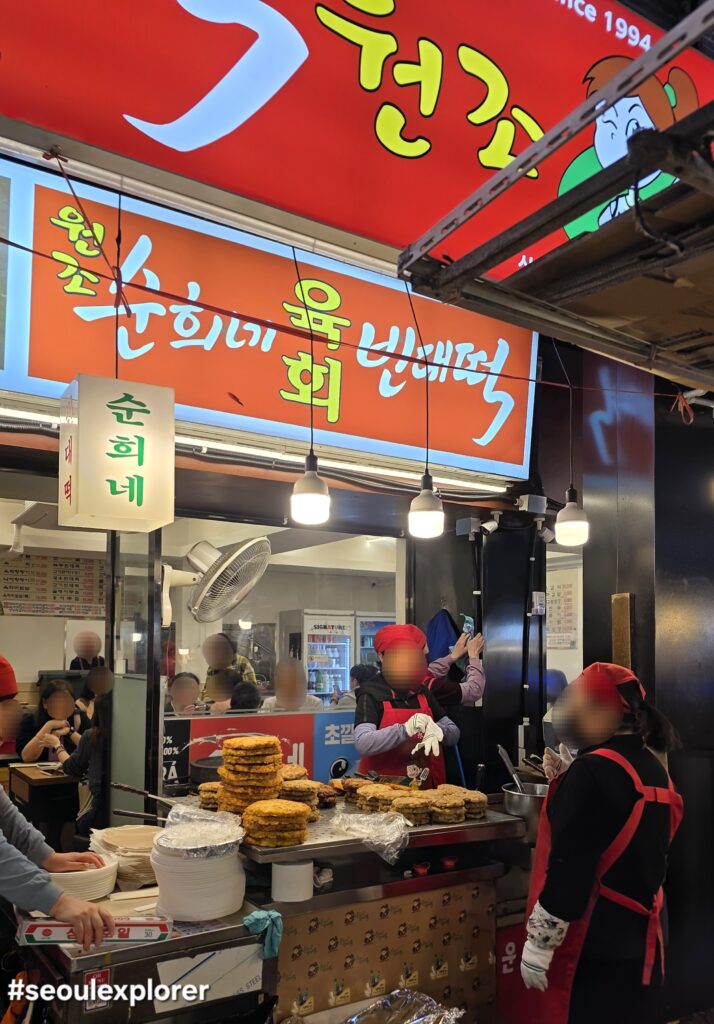
Your first stop must be Soonhee’s Bindaetteok (순희네 빈대떡). You’ll see large stone grinders turning mung beans into a thick paste right before your eyes. These pancakes are fried in generous amounts of oil until they are golden brown and incredibly crispy.
Pro Tip: Don’t just eat the pancake alone. Dip it in the soy sauce provided with pickled onions. The sharp, acidic crunch of the onions perfectly balances the rich, nutty flavor of the fried mung beans.
Check the exact location and reviews on [Google Maps: Soonhee’s Bindaetteok].
Small but Mighty: Mayak Gimbap
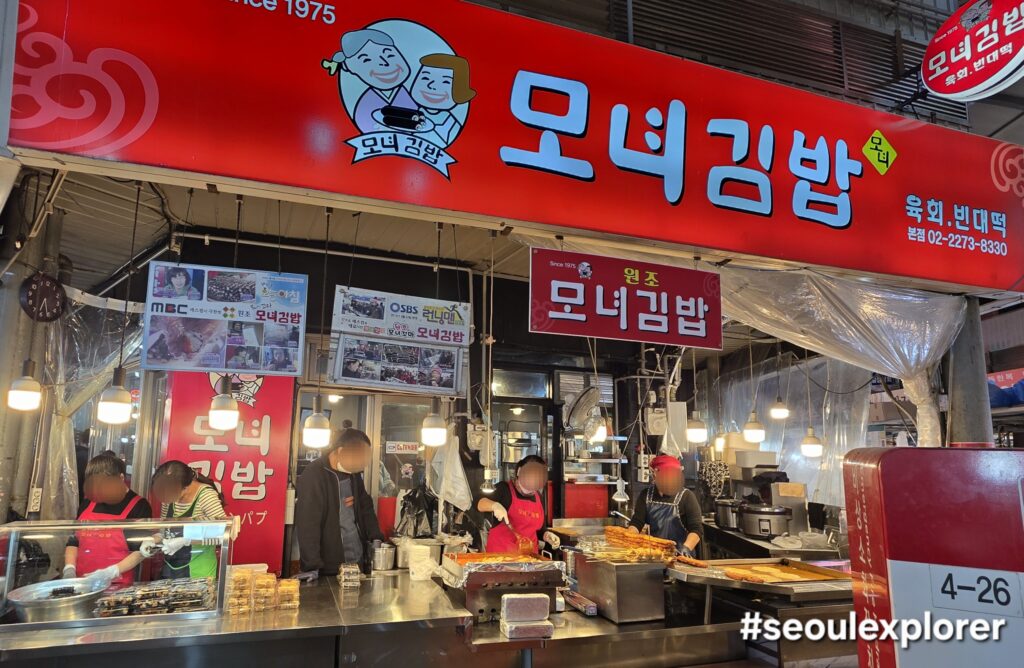
Next, look for the famous Mayak Gimbap (모녀마약김밥). In Korean, ‘Mayak’ means ‘narcotic,’ referring to how addictive these tiny rice rolls are. They are simple—filled with just carrots, pickled radish, and spinach—but when dipped into the signature mustard sauce, they become an explosion of flavor. It’s the perfect light snack to keep you going through the crowded aisles.
The Famous Long Line: Chapssal Twisted Donuts
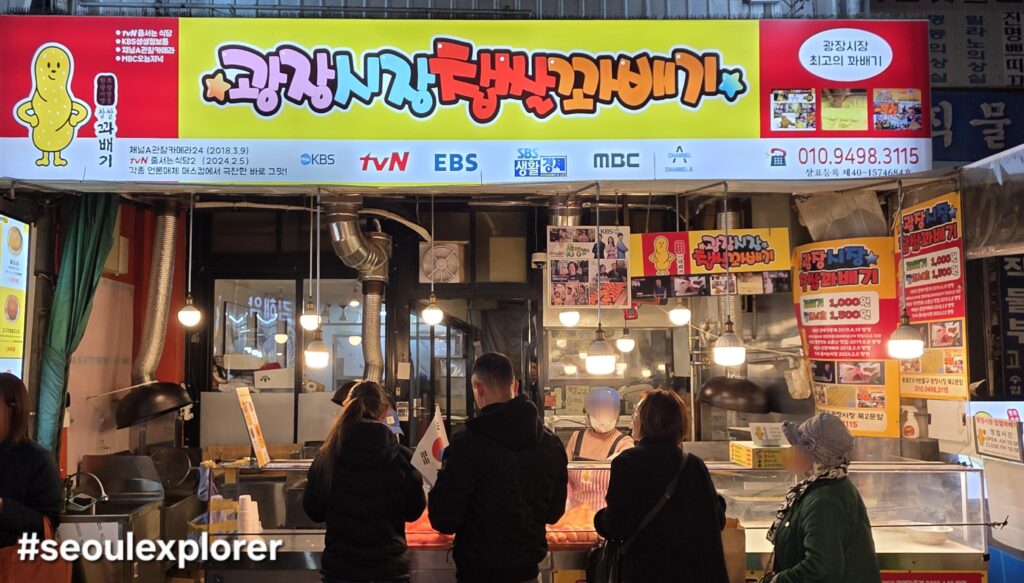
Before you get too full, you must head toward the North Gate for the Chapssal Twisted Donuts (찹쌀꽈배기). You’ll recognize it by the massive queue that snakes around the corner. These donuts are made with glutinous rice flour, making them incredibly chewy and airy. Tossed in a mix of sugar and cinnamon, they are best enjoyed while piping hot. Trust me, the 20-minute wait is worth every bite.
A New Legend: Abebae (아베베)
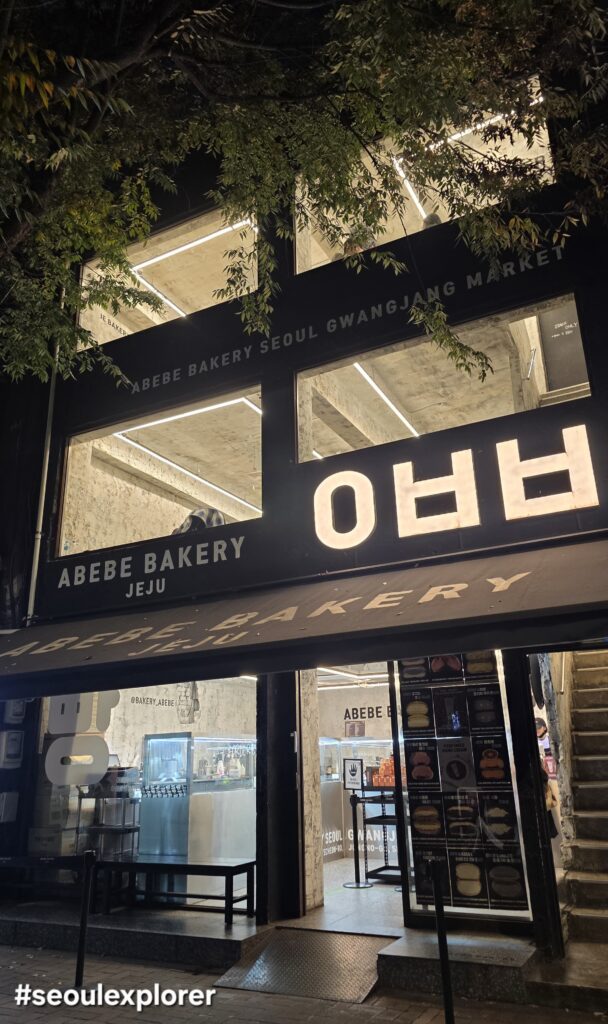
Gwangjang Market isn’t just about old traditions; it’s also home to the hippest new trends. Abebae (아베베), which originated from Jeju Island, has taken the market by storm. Their donuts are packed with unique Korean fillings like black sesame, peanuts, and mugwort. It’s a sophisticated twist on market snacks and shows how the younger generation is reimagining Korean desserts.
A Modern Oasis: Starbucks Gwangjang Market Branch
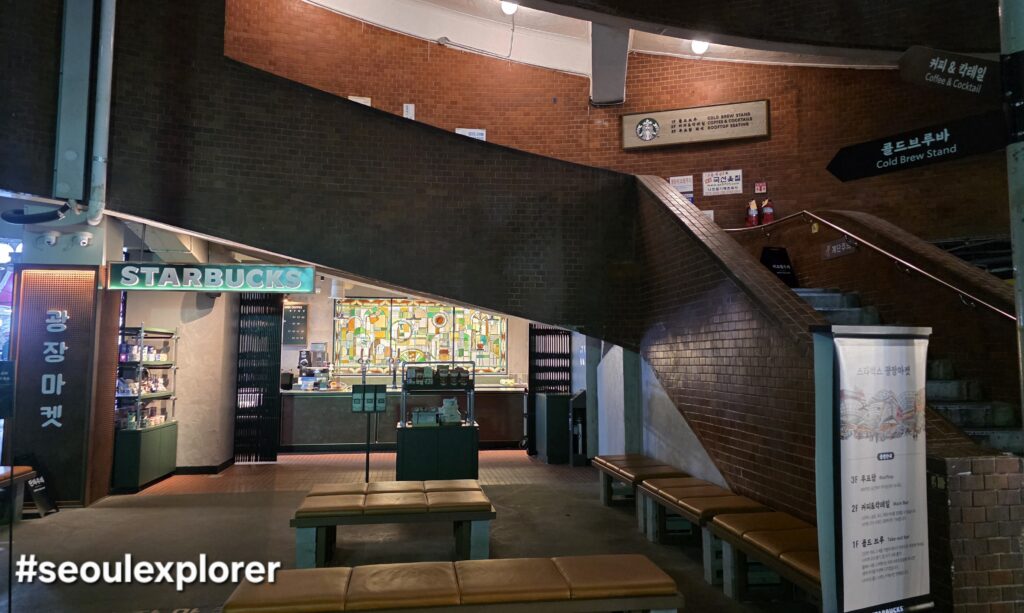
After all that eating and walking, you’ll need a place to rest. The Starbucks Gwangjang Market Branch is a fascinating space. It manages to maintain the rugged, industrial feel of the traditional market while offering the comfort of a modern cafe. It’s the perfect spot to sit down, organize your photos, and watch the bustling market life from a peaceful distance.
Find your way to this unique cafe via [Google Maps: Starbucks Gwangjang Market].
Mastering the Market: Essential Tips
As we discussed [How to Order Food in Korea] guide, ordering in a traditional market can be different from a modern restaurant.
- Cash is King: While some big stalls accept cards, many smaller vendors prefer cash or bank transfers.
- Finding a Seat: Don’t be shy! If you see an empty stool, point to it and ask “Yeogi an-ja-do doe-na-yo?” (Can I sit here?).
- Sharing is Caring: Most portions are large. I recommend going with a friend so you can try a little bit of everything.
For more official information about Seoul’s traditional markets, visit [VisitSeoul.net].
Gwangjang Market is more than just a place to buy food; it’s a living museum of Seoul’s vibrant culture. Whether you’re dipping a crispy pancake into onion soy sauce or waiting in line for a trendy Abebae donut, every moment here tells a story. Don’t forget to pack your Climate Card and an empty stomach! What’s the first thing you want to try at Gwangjang Market? Let me know in the comments!
- Seoul Temple Stay in 2 Hours: 3 Best Spots for Busy Travelers (2026)
- Seoul Hiking Guide 2026: Rent Gear & Best Local Trails
- Stop Waiting in Line! Check Seoul Real-Time Congestion Now
- Safe Night Walk in Seoul: 5 Well-Lit Routes (2026 Native Guide)
- Escape the Haze: Seoul Fine Dust Guide 2026 & Best Indoor Itinerary Tips