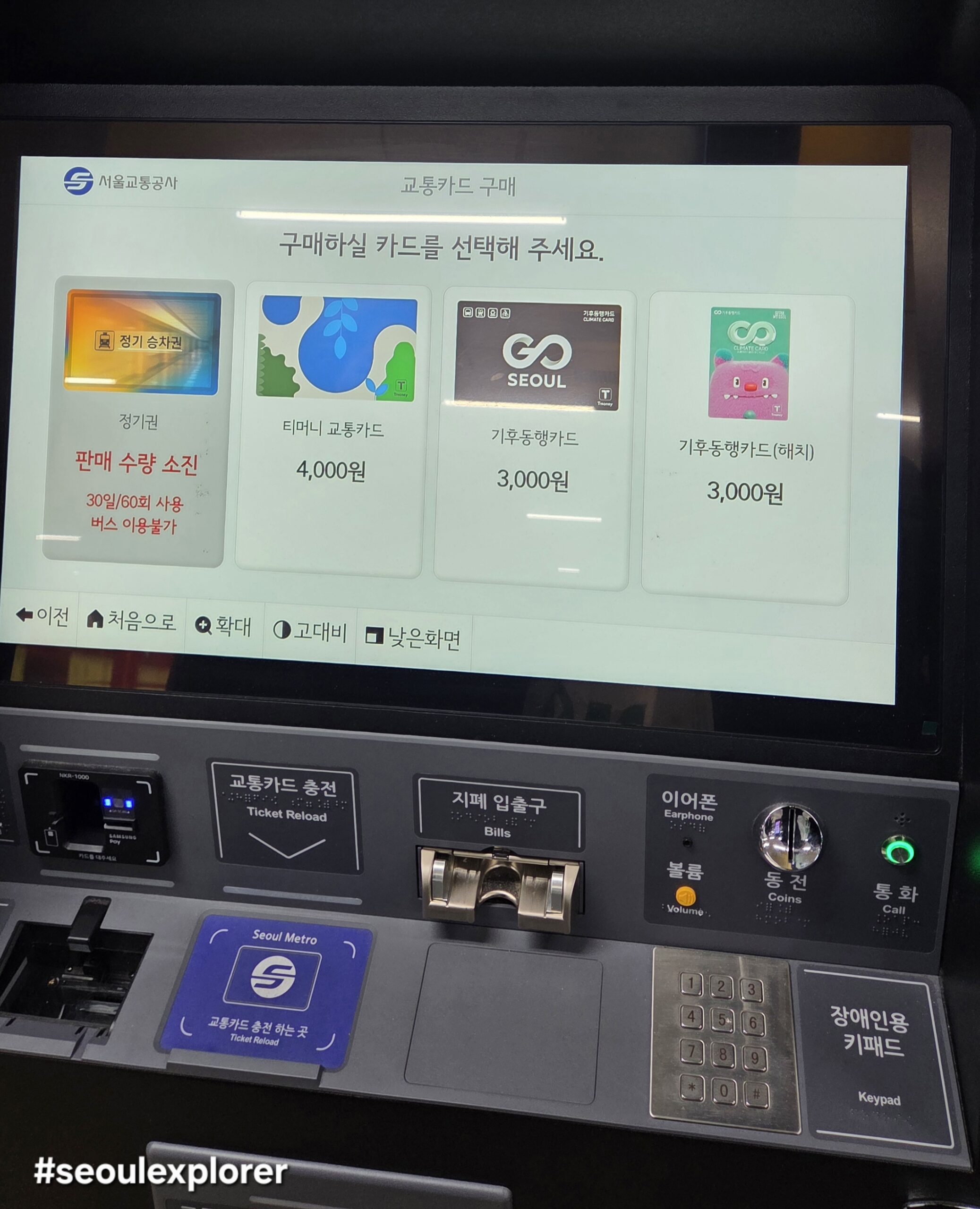
Welcome back to Seoul Explorer! If you followed my previous post, you’ve likely just stepped off the AREX at Seoul Station and are wondering, “Now what?” Well, to truly navigate this city like a pro, there is one magic item you absolutely need in your pocket: the T-money card.
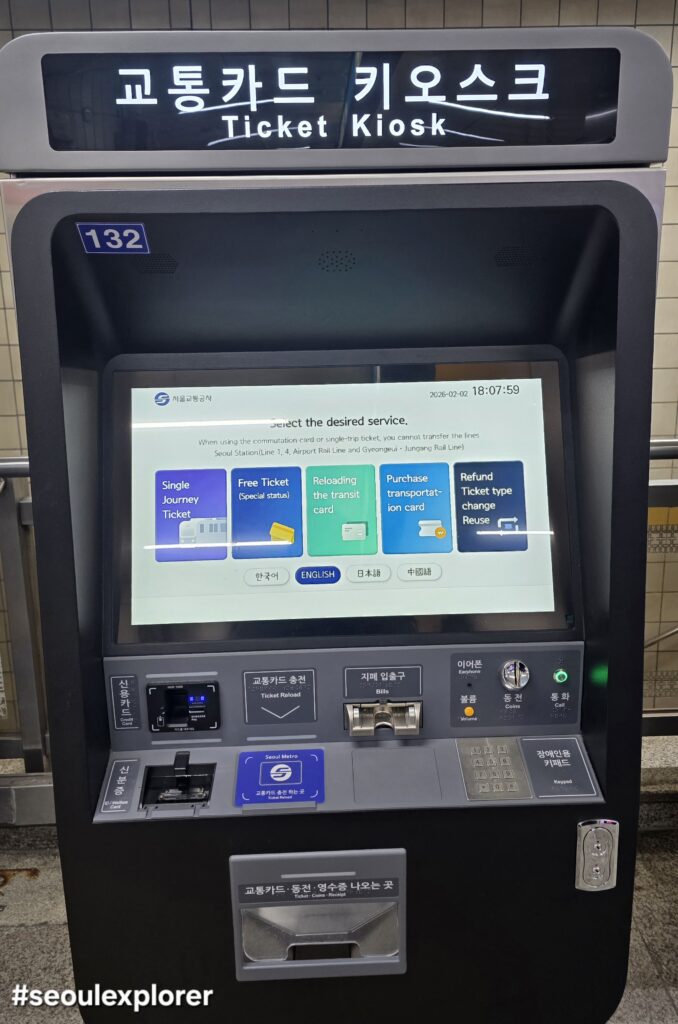
As someone who has lived in Seoul for a long time, I am still impressed by the sheer efficiency of our transit system. Growing up here, I’ve seen how the T-money card has become an essential part of daily life for everyone in the city. Today, I’m going to share my local knowledge and tips so you can navigate Seoul as smoothly as a resident, without fumbling with single-journey tickets or spare change.
What Exactly is a T-Money Card?
Think of the T-money card as your all-access pass to Korea. It is a rechargeable smart card used for paying fares on subways, buses, and even some taxis. But it’s not just for transport; you can use it at convenience stores, bakeries, and even some vending machines.
The beauty of this card lies in the Transfer Discount. In Seoul, if you switch from the subway to a bus (or vice-versa) within 30 minutes, your next leg of the journey is often free or heavily discounted. This alone will save you enough money for an extra sticks of street food!
Where to Buy and How to Top Up
One of the best things about Korea is convenience. You can find T-money cards almost everywhere.
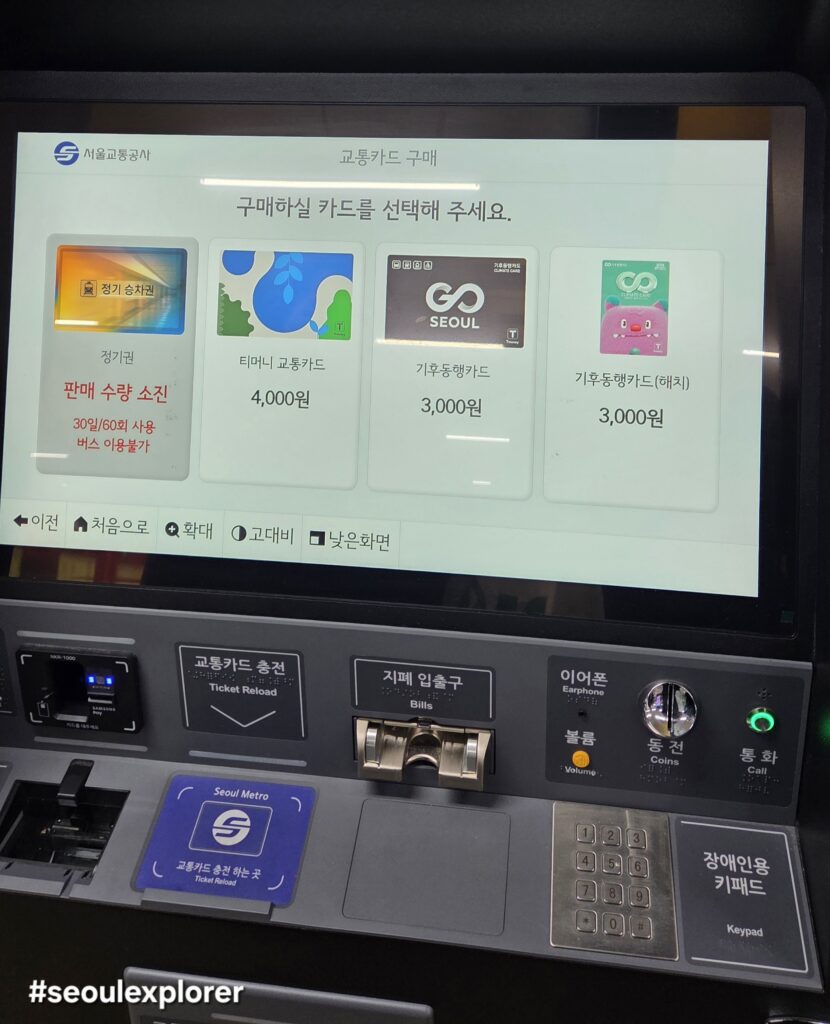
- Convenience Stores: Look for GS25, CU, 7-Eleven, or Emart24. They are on every corner. You can buy the card here (usually for 2,500 to 5,000 KRW depending on the design) and ask the clerk to “charge” (top up) it for you.
- Subway Stations: Every station has automated ticket vending machines that support English, Chinese, and Japanese.
Pro-Tip from my experience: When you buy your card, I highly recommend checking out the "character" versions. Sometimes they have collaborations with Kakao Friends or K-pop stars. It makes for a great, functional souvenir!
How to Use It (Don’t Forget the Tag!)
Using the card is simple: Tag on and Tag off. When you enter a subway station or board a bus, place your card on the sensor until it beeps. It will show your current balance and the fare deducted.
Crucial Step: You must tag your card again when you exit the subway or get off the bus. Even if the bus fare is a flat rate, tagging off is what triggers the transfer discount for your next ride. If you forget, the system might charge you a penalty fare on your next trip. I made this mistake once and felt the sting of losing a few extra won—don't be like me!
Using T-Money Beyond Transportation
Did you know you can pay for your ramen at a convenience store with your T-money card? If you have a few thousand won left on your card at the end of your trip and don’t want to go through the refund process, just head to a GS25 or CU at the airport and spend the remaining balance on snacks to take home. It’s a lifesaver when you’re trying to get rid of every last bit of Korean currency.
Refund Policy: Saying Goodbye
If you have a large balance left (over 20,000 KRW), you might want a refund. You can get this at most convenience stores or service desks in subway stations. They will return the balance to you in cash, minus a small service fee (usually 500 KRW). Note that the cost of the card itself is non-refundable, but hey, it’s a cool souvenir to keep for your next visit!
The T-money card isn’t just a convenience; it’s a rite of passage for anyone visiting Seoul. It grants you the freedom to explore every alleyway and hilltop cafe without worrying about logistics.
In my next post, we’ll take that T-money card and head to some of the most breathtaking Night View Spots in Seoul. You’ve got your transport sorted; now it’s time to see the city glow!
- Seoul Temple Stay in 2 Hours: 3 Best Spots for Busy Travelers (2026)
- Seoul Hiking Guide 2026: Rent Gear & Best Local Trails
- Stop Waiting in Line! Check Seoul Real-Time Congestion Now
- Safe Night Walk in Seoul: 5 Well-Lit Routes (2026 Native Guide)
- Escape the Haze: Seoul Fine Dust Guide 2026 & Best Indoor Itinerary Tips