Exploring the culinary delights of Seoul is a highlight for any traveler. However, when you step into a modern Korean restaurant or try to order food to your accommodation, you might be surprised to see more tablets and machines than human servers. Korea’s dining culture has become highly digitalized. In this guide, I’ll teach you how to master these systems—much like [How to Use the Seoul Subway Easily]— so you can order food in Korea like a seasoned local.
Using Table Tablets to Order Food in Korea
Nowadays, many restaurants in popular areas like Myeongdong and Ikseon-dong use table-top tablets. This is the most common way to order food without needing to speak the language.
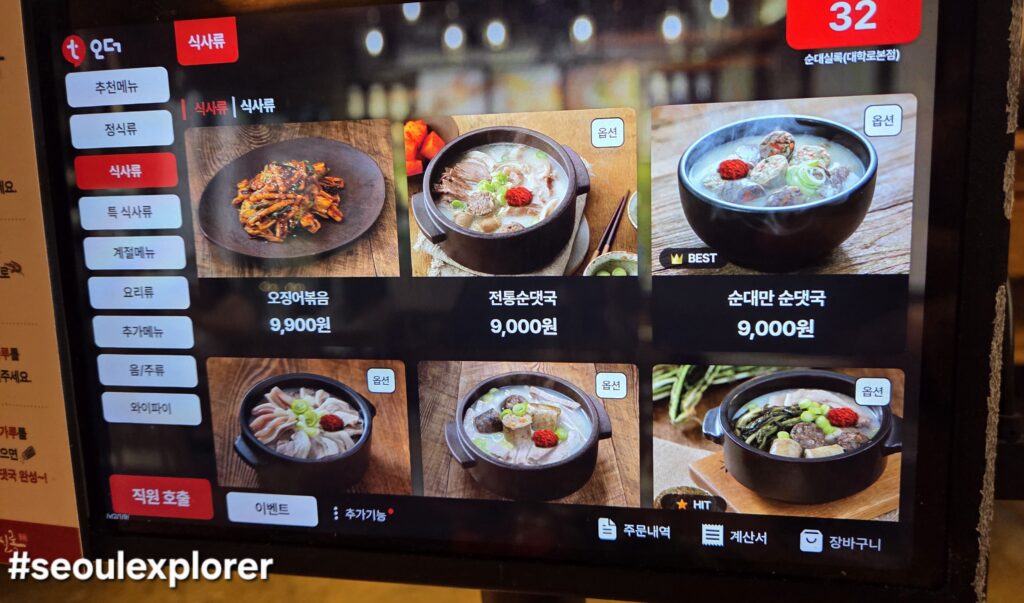
- How it Works: Each table has its own tablet. You can browse the menu with high-quality photos, select your items, and sometimes even pay right there using the card reader attached to the tablet.
- Language Tip: Look for a small globe icon or a ‘Language’ button. Most of these systems offer English, Chinese, and Japanese translations.
- Service at Your Fingertips: Need more water or side dishes (Banchan)? Instead of shouting “Yeogiyo!” (Excuse me), look for the ‘Staff Call’ button on the screen. It often has sub-options for specific requests.
Local Tip: Some restaurants require you to pay immediately at the tablet, while others ask you to pay at the counter when leaving. If you see a card reader attached, it’s usually a “pay-first” system.
Understanding the ‘Self-Service’ Culture
When you enter a restaurant in Korea, even after ordering through a tablet, there are things you should know about the table setting. To successfully order food in Korea, you must understand the ‘Self-service’ culture that follows the ordering process.
- The Magic of Free Refills: One of the best things about dining in Korea is that side dishes (Banchan) are free and unlimited! While the first round is usually served by staff, many modern restaurants have a ‘Self-Service Bar.’ If you see a sign saying “Self (셀프),” it means you can go and get more kimchi, sprouts, or water yourself.
- Hidden Cutlery: Don’t panic if you don’t see spoons or chopsticks on the table. In 90% of modern Korean restaurants, there is a hidden drawer under the side of your table. Just pull it out, and you’ll find neatly arranged cutlery and napkins.
- The Bell System: If your table doesn’t have a tablet, look for a small round button on the table. Pressing this ‘Calling Bell’ notifies the staff. It’s not considered rude in Korea; in fact, it’s the most efficient way to get service!
Mastering Self-Service Kiosks: Quick Bites and Cafes

In fast-food joints or trendy cafes, you’ll encounter large standing kiosks. Mastering these is essential for a smooth order food in Korea experience.
- Payment First: Most kiosks are ‘Cashless,’ meaning they only accept cards. If you only have cash, you usually have to go to the counter, but many places are becoming strictly card-only.
- Order Process: Select ‘Eat In’ or ‘Take Out’ first, then browse the categories. Be careful with ‘Options’ – many Korean drinks allow you to customize ice levels or sugar content!
Food at Your Doorstep: Delivery Apps for Foreigners
Korea is the kingdom of delivery. Travelers can use specific apps to order food in Korea even without a local ID. While the most famous apps are ‘Baedal-ui Minjok’ and ‘Yogiyo,’ they require a Korean phone number and ID for registration. For travelers, I recommend these alternatives:
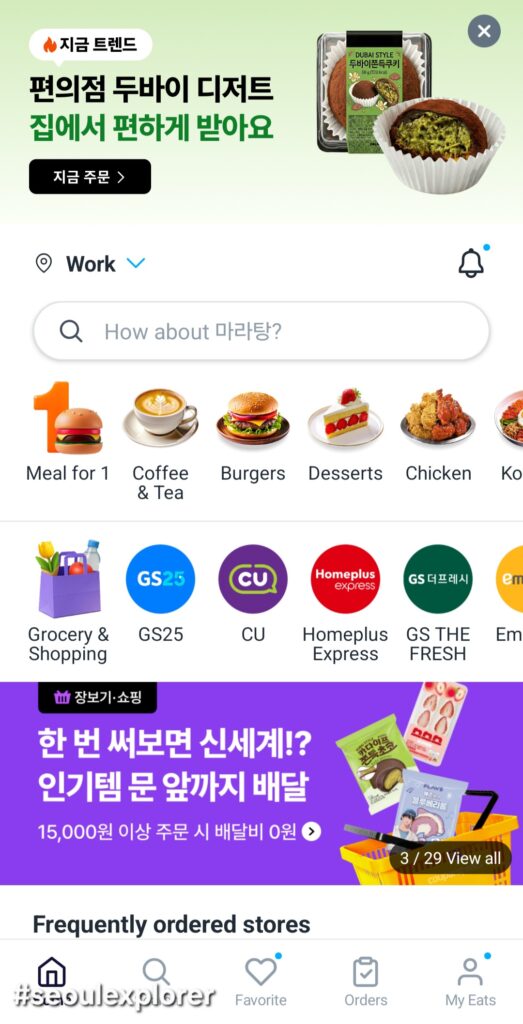
Coupang Eats (쿠팡이츠): This service is a favorite among travelers because it offers a user-friendly English interface and accepts most international credit cards. It is incredibly fast for getting fried chicken or Jajangmyeon delivered straight to your hotel lobby.
Shuttle Delivery: This is another excellent choice designed specifically for the expat and tourist community, offering full English support and a curated list of foreigner-friendly restaurants.
Native Tip: When I order food at home, I usually use the ‘Leave at the door’ option to keep things simple. It’s a great way to receive your meal comfortably without any language pressure!
What to Do with the Leftover Containers?
If you ordered food to your hotel or Airbnb using Coupang Eats, you might wonder about the leftover packaging.
- Disposable vs. Multi-use: Most deliveries now use disposable plastic containers. You should rinse them slightly and put them in the designated recycling area of your accommodation.
- The ‘Bong-tu’ (Plastic Bag) Rule: In Korea, waste disposal is very strict. If you are staying in an Airbnb, ask your host about the ‘standardized garbage bags.’ For hotels, you can usually leave the neatly packed delivery containers inside the room or ask the front desk for the designated spot.
- Liquid Waste: Never pour leftover soup or sauces directly into the trash bag. Try to dispose of liquids in the sink before recycling the plastic containers.
Essential Korean Phrases for Ordering
Even in a digital world, sometimes you need to speak. Here are the most useful phrases:
- “Yeogiyo!” (여기요!): “Excuse me!” – used to get attention.
- “Mulsom juseyo.” (물 좀 주세요.): “Please give me some water.”
- “Deol maep-ge hae-juseyo.” (덜 맵게 해주세요.): “Please make it less spicy.” (Crucial for some!)
Mastering the process to order food in Korea will not only save you time but also give you the confidence to explore the incredible culinary landscape of Seoul. From the high-tech kiosks in trendy cafes to the convenient delivery apps you can use at your hotel, this guide is designed to make your journey as delicious and stress-free as possible. After a long day of walking around with your Climate Card, there’s nothing better than a seamless dining experience. If you’ve encountered any unique or tricky ordering systems during your trip, please share your stories in the comments below!
- Seoul Temple Stay in 2 Hours: 3 Best Spots for Busy Travelers (2026)
- Seoul Hiking Guide 2026: Rent Gear & Best Local Trails
- Stop Waiting in Line! Check Seoul Real-Time Congestion Now
- Safe Night Walk in Seoul: 5 Well-Lit Routes (2026 Native Guide)
- Escape the Haze: Seoul Fine Dust Guide 2026 & Best Indoor Itinerary Tips