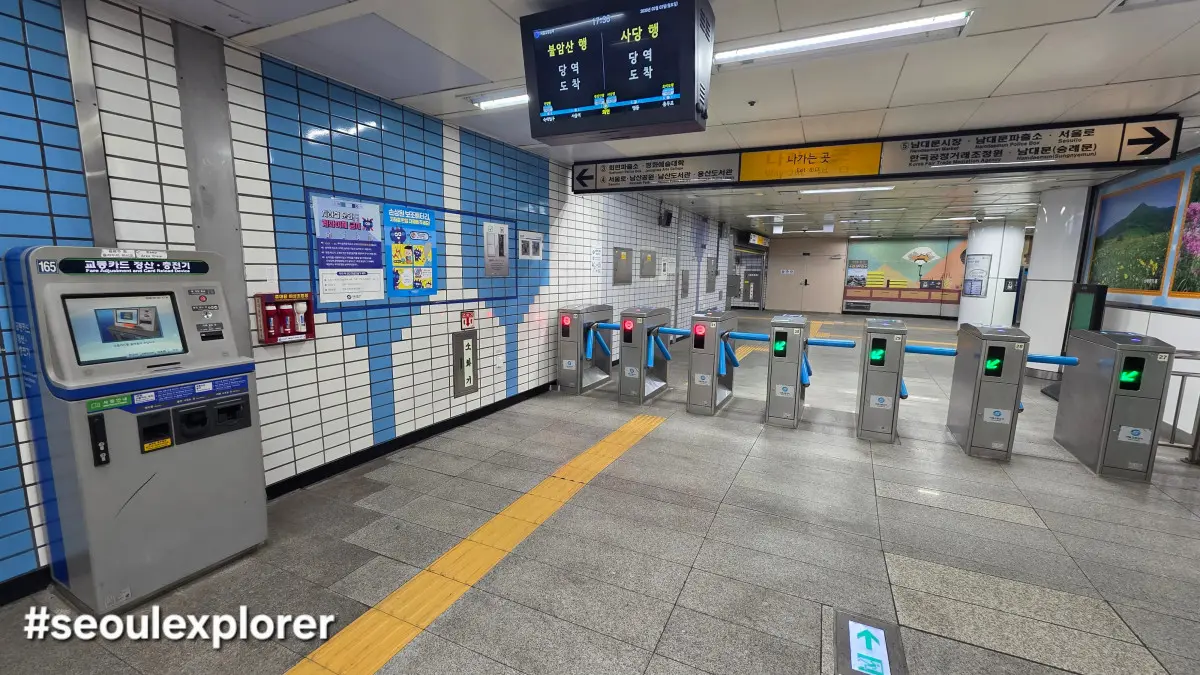
Getting around Seoul is surprisingly easy—until you enter a massive transfer station, miss your exit, or realize you still have money left on your T-money card before your flight home.
Over the years, I’ve helped many visiting friends navigate the Seoul Subway system, and the same questions always come up. Which app should I use? How do subway transfers work? Can I get my T-money balance refunded before leaving Korea?
In this Seoul Subway guide, I’ll share practical local tips, explain how T-money refunds work, and help you avoid the most common mistakes travelers make in Seoul’s transportation network.
The Art of the T-money Refund
One of the most common questions I get is: “What do I do with the remaining balance on my T-money card before I leave Korea?” You shouldn’t let that money go to waste!
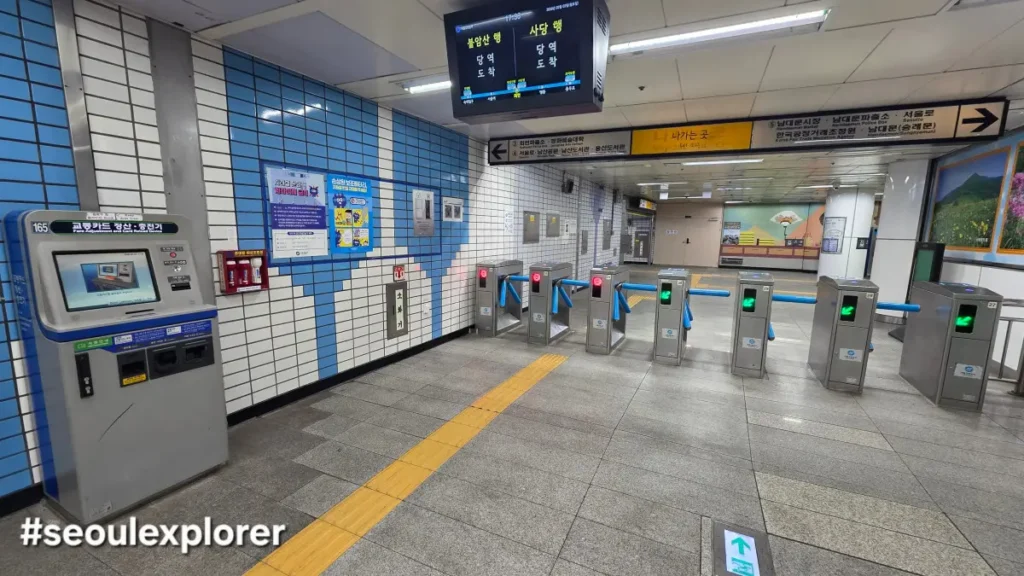
- Where to Refund: You can get a refund at most convenience stores (GS25, CU, 7-Eleven) or at the service centers inside Seoul subway stations.
- The Process: Simply hand your card to the staff and say “Refund, please” or “Hwan-bul (환불).”
- Fees and Limits: There is usually a small service fee of 500 KRW. Most convenience stores can refund up to 20,000 KRW or 30,000 KRW. If you have a large balance (over 50,000 KRW), you might need to visit the head office or a major subway service center.
- Important: The cost of the physical card itself (usually 3,000 – 5,000 KRW) is non-refundable. Keep the card as a souvenir!
< Quick T-money Refund Guide >
| Refund Location | Typical Refund Limit | Service Fee |
|---|---|---|
| Convenience Stores | 20,000–30,000 KRW | 500 KRW |
| Subway Service Centers | Higher balances possible | 500 KRW |
| T-money Headquarters | Large balances | Policy may vary |
Navigating the “Labyrinth” of Stations
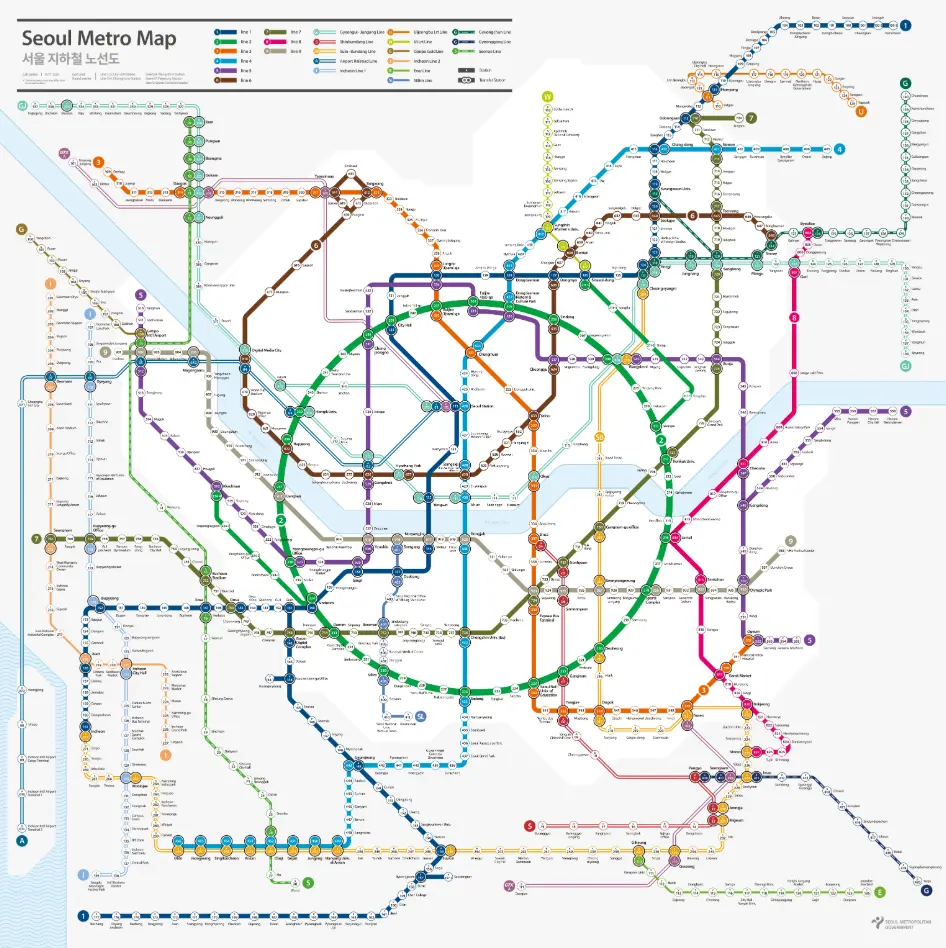
Seoul’s major transfer stations like Myeong-dong, Gyeongbokgung Palace, Gangnam, or Dongdaemun History & Culture Park can feel like a maze.
- Follow the Colors: Every line has a distinct color (Line 2 is green, Line 3 is orange, etc.). Follow the colored stripes on the floor or the arrows on the ceiling—they are much more reliable than trying to read every sign.
- The ‘Safe’ Exit: If you get lost underground, look for the ‘Exit’ signs (usually yellow). Every exit is numbered. It’s always better to go out to the street level and find your bearings than to wander aimlessly underground.
Essential Seoul Subway Etiquette (The Local Way)
To travel like a true Seoulite, keep these three unwritten rules in mind:
- The Pink Seats: You’ll see bright pink seats at the end of each row. These are strictly for pregnant women. Even if the train is packed, locals usually leave them empty.
- Elderly Seating: The seats at the very ends of the carriages are reserved for the elderly and disabled. Avoid sitting there unless you want some stern looks!
- Right Side of the Escalator: If you aren’t in a rush, stand on the right side of the escalator. The left side is for people who are walking or running to catch their train.
Extra Tip 1: Heavy Luggage? Use the ‘T-Locker’ Service!
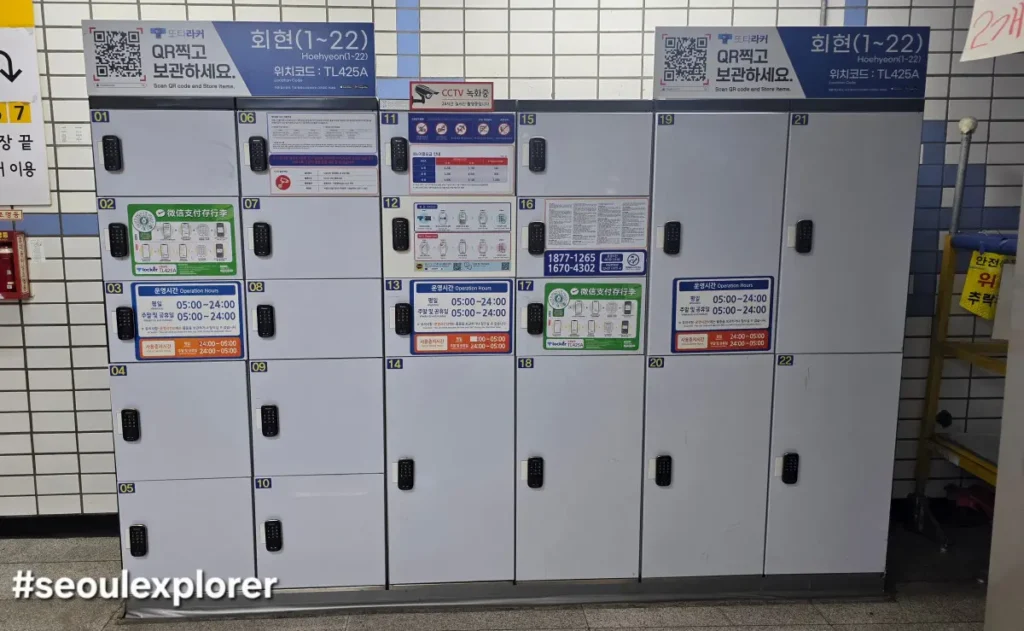
If you have already checked out of your hotel but your flight isn’t until late at night, don’t drag your heavy suitcases around. Almost every subway station in Seoul is equipped with automated storage lockers called ‘T-Locker’.
– How to find them: Look for the digital kiosks near the station exits. They support English, Chinese, and Japanese.
– Pricing: For the first 4 hours, it typically costs around 2,200 to 4,100 KRW for a small locker and 4,400 to 5,400 KRW for a large one (perfect for suitcases).
– Operating Hours: Usually from 5:00 AM to midnight. Keep in mind that you cannot retrieve your items once the station closes!
– Pro Tip: You can even use the ‘T-Locker’ app to check for available spaces in advance, so you don’t waste time wandering around with your bags.
Extra Tip 2: Survive the ‘Hell-train’ (Rush Hour Secrets)
While the Seoul subway system is efficient, there is one thing every traveler should avoid: Rush Hour. Locally known as “Hell-train” (Ji-ok-cheol), the trains become incredibly packed with commuters.
– Peak Times: Avoid traveling between 7:30 AM – 9:30 AM and 5:30 PM – 7:30 PM on weekdays.
– The Lines to Watch Out For: Line 2 (Green) and Line 9 (Gold) are the busiest. Especially on Line 9, the ‘Express’ trains are notoriously crowded. If you have large luggage, you might find it impossible to even get on the train during these hours.
– Local Survival Strategy: If you must travel during these times, try to stand near the center of the carriage rather than the doors, as people will be pushing in and out at every stop. Also, remember to say “Jamsimanyo” (Excuse me) or “Naerilgeyo” (I’m getting off) firmly if you need to push through the crowd to reach the exit.
Extra Tip 3: Don’t Miss the Last Train
One mistake many visitors make is assuming the Seoul Subway runs all night.
Most subway services stop operating between midnight and 1:00 AM, although exact times vary by line and station.
If you are spending the evening in Hongdae, Gangnam, Itaewon, or Myeongdong, always check the last train before heading out. Missing the final train could leave you relying on night buses or expensive taxi rides.
I personally recommend checking Naver Map or Kakao Map before dinner if you plan to stay out late.
Real-time Apps: Your Digital Compass
Google Maps works, but for the Seoul subway, it’s not the best. I highly recommend downloading ‘NaverMap’, ‘Subway Korea’ or using ‘KakaoMap’. These apps tell you exactly which carriage number is closest to your transfer stairs, saving you minutes of walking. Check out Beyond Google Maps: 4 Seoul Travel Apps That Actually Work in 2026, a list of essential apps you need for your trip to Seoul.
FAQ
Can I use one T-money card for multiple people?
Generally, each passenger should use their own T-money card when entering and exiting the subway system.
Can I get a T-money refund at Incheon Airport?
Yes. Refund services are available at designated locations, although refund limits may apply.
How much should I load onto a T-money card?
Most travelers find that 20,000–30,000 KRW is enough for several days of subway and bus travel.
Does Google Maps work for the Seoul Subway?
It works for basic navigation, but Naver Map and Kakao Map usually provide more accurate route and transfer information.
What is the busiest Seoul Subway line?
Line 2 is generally considered the busiest line in Seoul, especially during weekday rush hours.
The Seoul subway is more than just transportation; it’s a gateway to discovering every hidden corner of this beautiful city. I hope these tips help you feel like a local on your next ride. If you’re heading back to Incheon Airport after your subway journey, don’t forget to check “Incheon Airport to Seoul Station: 2026 AREX Guide, Prices & Local Tips“! If you have any questions about specific routes or transfers, feel free to leave a comment below. Safe travels!
- Seoul Station Guide (2026): Lockers, AREX, KTX & Local Tips for First-Time Visitors
- Seoul Lost and Found Guide (2026): What to Do If You Lose Your Phone, Wallet or Passport
- Seoul Subway Lockers Guide (2026): Prices, Reservation & T-Locker Tips
- Seoul Taxi Guide (2026): How to Take a Taxi, Use Kakao T & Pay Like a Local
- Korea Transportation Tips (2026): 10 Mistakes Every Tourist Should Avoid