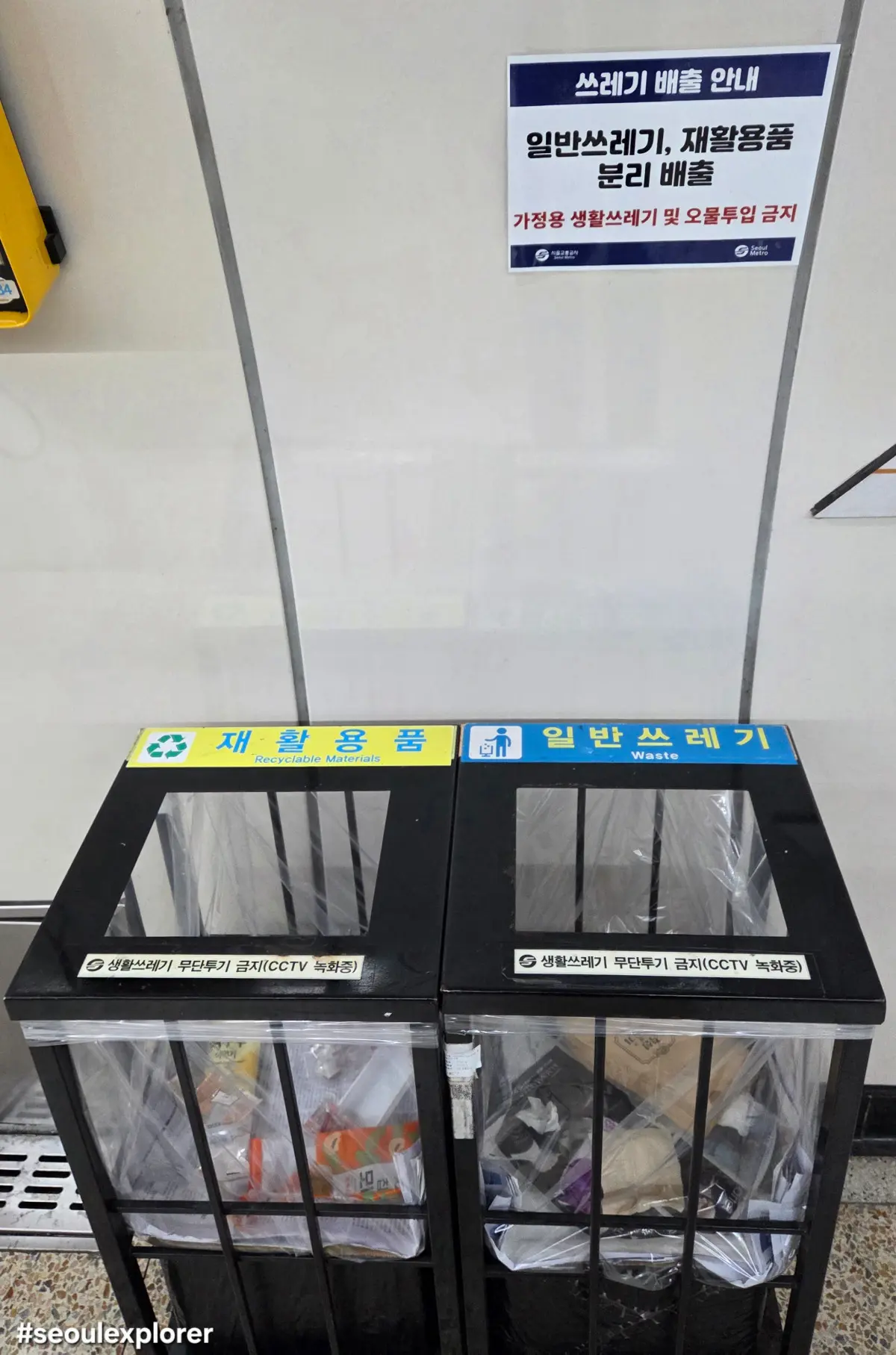
If you’re looking for a clear Seoul Trash Guide, you’re probably worried about those complicated recycling rules. One of the biggest surprises for visitors staying in an Airbnb is Seoul’s strict waste disposal system. Unlike many countries, trash, food waste, and recyclables must be separated correctly before disposal.
Over the years, I’ve helped several foreign friends understand Seoul’s recycling rules, and the same questions come up every time: Which bag should I buy? Is this food waste? Where can I throw this away? That’s why I wrote this Seoul Trash Guide. I’ll show you the exact bags you need to buy at the GS25 or CU nearby and help you manage your waste like a pro for a stress-free stay in this beautiful city.
1. The Golden Rule: Pay-As-You-Throw (Jongnyangje)
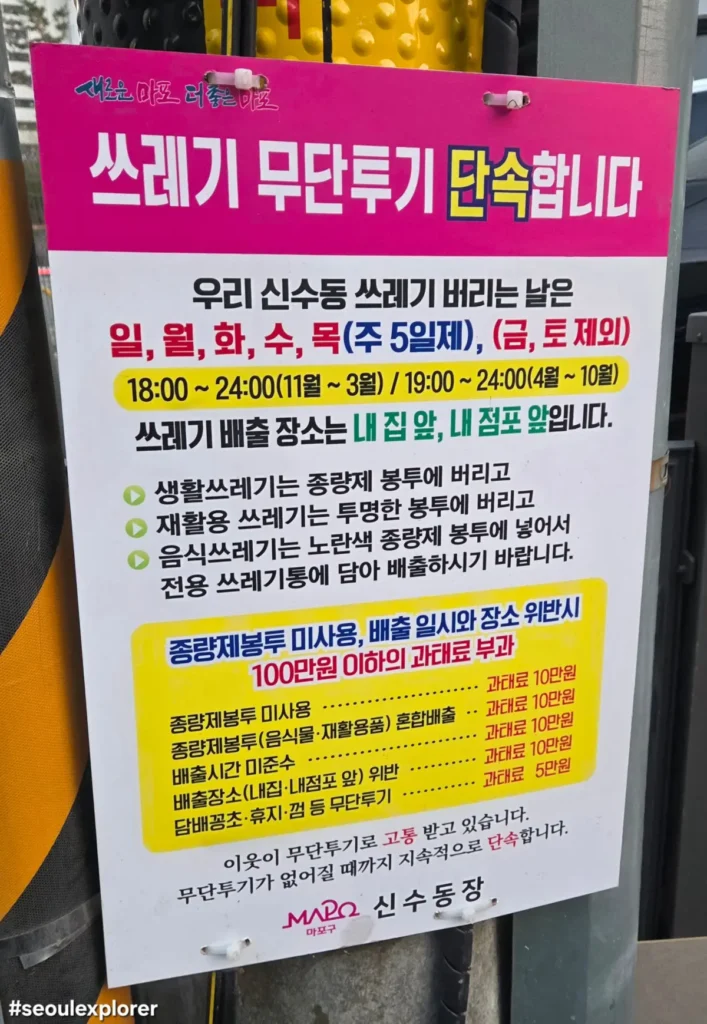
In Seoul, you cannot just use any plastic bag for your trash. You must purchase official “Standard Plastic Garbage Bags” (Jongnyangje Bongtu) at nearby convenience stores or supermarkets. These bags are color-coded by district (Gu). For example, a bag bought in Myeongdong (Jung-gu) cannot be used in Hongdae (Mapo-gu).
- General Waste (Yellow or White bags): This is for non-recyclable items like used tissues, diapers, and heavily soiled wrappers.
- Food Waste (Usually Orange or Yellow bags): This is the most critical part of the Seoul Trash Guide. In many apartment complexes, food waste is collected using RFID-based systems.
What many travelers don’t realize is that these bags actually include the “waste processing fee” in their price. So, by buying the bag, you are paying for the service to have it taken away. Using the correct trash bag is important because local districts can impose penalties for improper waste disposal.
This district-based system can be confusing, but it’s the backbone of Korea’s environmental efforts. If you want to dive deeper into the official regulations and see how the city is working toward a cleaner future, you can check the official waste management policies on the Seoul Metropolitan Government website. Understanding these rules is the first step to being a responsible traveler in Korea.
2. Is It Food Waste or General Waste?
This is where many visitors get confused, and it’s often the trickiest part of Seoul’s waste disposal system. A simple rule of thumb: If an animal (like a pig) can eat it, it’s food waste. If it’s too hard, too salty, or too fibrous for an animal to digest, it goes into General Waste.
- The Bone Trap: Chicken bones, beef bones, and pork ribs are NOT food waste. They are General Waste.
- The Shell Trap: Eggshells, shrimp shells, and clam shells are General Waste.
- The Fruit Trap: Watermelon rinds are food waste (but cut them small!), while peach pits or mango seeds are General Waste.
| Item | Category |
|---|---|
| Chicken Bones | General Waste |
| Beef Bones | General Waste |
| Eggshells | General Waste |
| Shrimp Shells | General Waste |
| Clam Shells | General Waste |
| Watermelon Rind | Food Waste |
| Banana Peel | Food Waste |
| Peach Pit | General Waste |
| Mango Seed | General Waste |
Pro Tip: In 2026, some apartment complexes use an RFID card system. You tap the card, the bin opens, it weighs your food waste, and charges your account. If your Airbnb provides a small card, this is what it’s for! If you’ve been following my [Korean Dining Etiquette: What Tourists Should Never Do at the Table] post, you know that Koreans value cleanliness—this extends to how we discard the remains!
3. The 2026 Recycling Revolution: No Labels Allowed!
Seoul aims to be a zero-waste city, and the Seoul Trash Guide for recycling is very specific. Recyclables should be clean and free from food residue whenever possible.
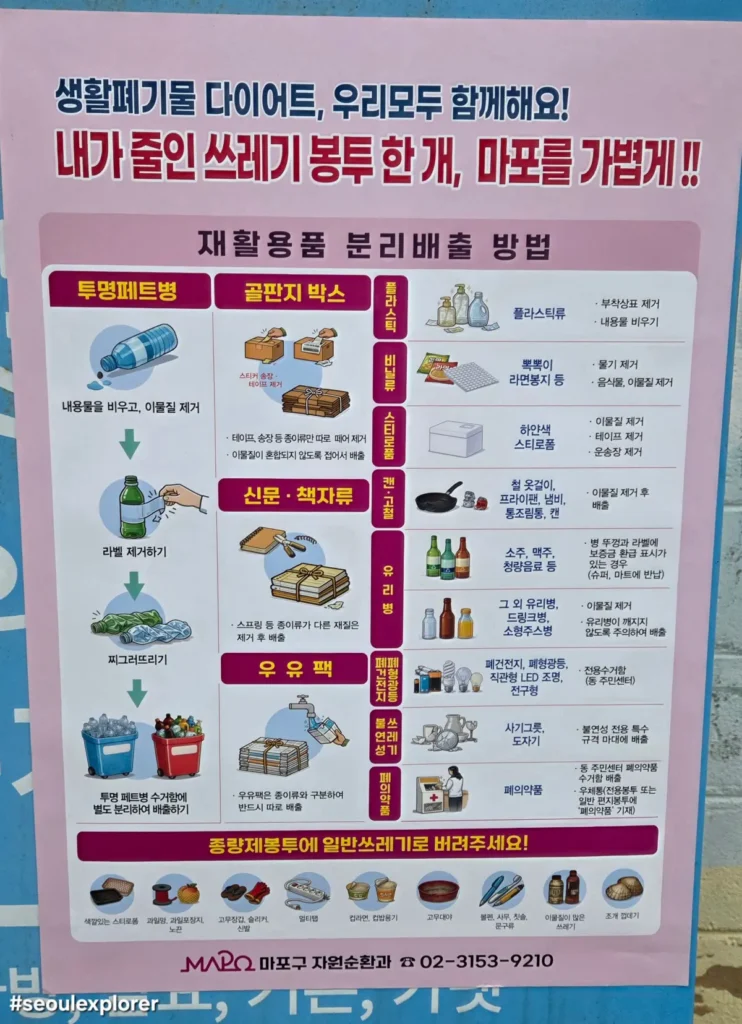
- Transparent PET Bottles: You must remove the plastic label and the cap. Crush the bottle flat. There are specific white/transparent bins for these.
- The “Delivery Food” Crisis: Korea has the best delivery food, but it creates a lot of plastic waste. You MUST wash the red spicy sauce out of the plastic containers. If the stain won’t come out, it’s no longer recyclable—throw it in the General Waste bag.
- Vinyl is Everywhere: Ramen packets, snack bags, and even the tiny plastic wrap around your straw are considered “Vinyl.” Collect these in a separate clear bag.
4. Where and When to Dump?
Unlike many Western countries, you cannot just throw trash out anytime.
Residential Areas: Most neighborhoods have designated times (usually after 6:00 PM or 8:00 PM until midnight).
Public Trash Cans: You will notice a lack of public trash cans on the streets of Seoul. This is to encourage the Seoul Trash Guide's principle of taking your waste home. However, you can find them near subway stations and bus stops. If you're lost while looking for one, my guide on [4 Essential Seoul Travel Apps] can help you navigate to the nearest station.
5. Practical Trash Bin Tips for Travelers
If you are out exploring places like the [Ikseon-dong Hanok Village] or shopping at [Namdaemun Market], you will realize there are almost NO trash cans on the street. This is a deliberate policy to stop people from dumping household waste in public bins, and it’s a key reason why you need to understand the Seoul Trash Guide before heading out. So, what do you do with that empty coffee cup?
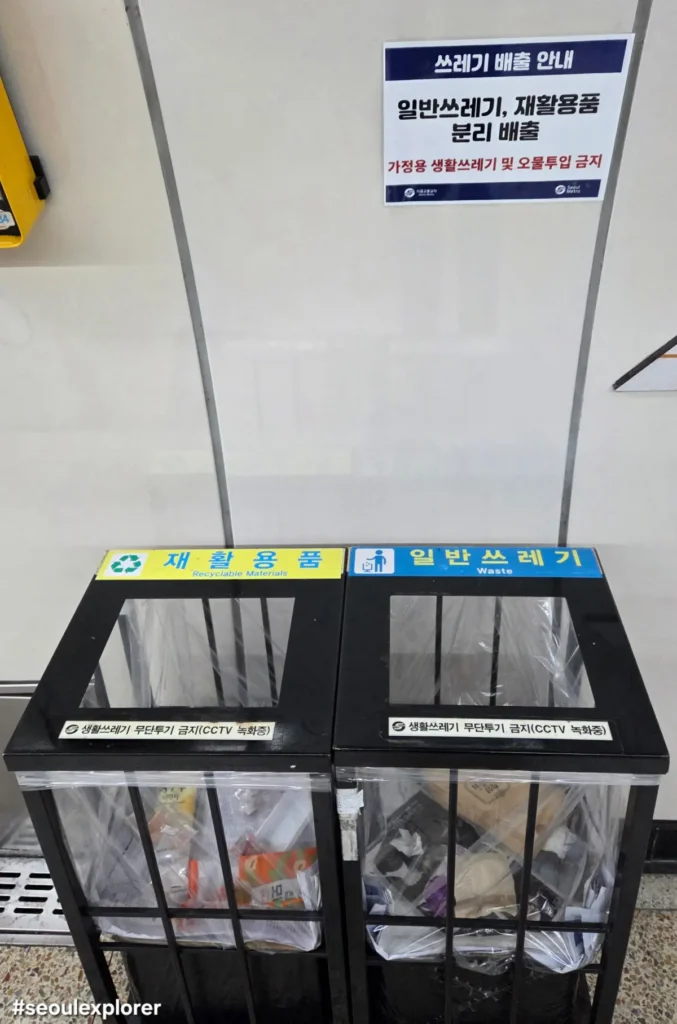
The Subway Hack: Every subway station has a set of recycling bins near the ticket gates. This is your safest bet.
The Convenience Store Hack: If you bought the item at a GS25 or CU, you can usually use their small bin outside. But don't dump your personal bag of trash there!
The "I'm Sorry" Method: If you bought a coffee, you can return the cup to the cafe you bought it from. Most cafes will kindly take it back.
Following the Seoul Trash Guide might seem overwhelming at first, but it is a way to show respect to the local community and the environment. By sorting your waste correctly, you contribute to keeping Seoul clean and sustainable. Once you understand the basics, Seoul’s waste disposal system is actually quite logical. Following these simple rules will help you avoid confusion and enjoy your stay with confidence. If you have any questions about specific items, feel free to leave a comment below. Safe travels, and let’s keep Seoul beautiful together!
- Seoul Station Guide (2026): Lockers, AREX, KTX & Local Tips for First-Time Visitors
- Seoul Lost and Found Guide (2026): What to Do If You Lose Your Phone, Wallet or Passport
- Seoul Subway Lockers Guide (2026): Prices, Reservation & T-Locker Tips
- Seoul Taxi Guide (2026): How to Take a Taxi, Use Kakao T & Pay Like a Local
- Korea Transportation Tips (2026): 10 Mistakes Every Tourist Should Avoid