If you are planning a trip to Seoul in 2026, one question comes up again and again: should you buy a Climate Card or a Discover Seoul Pass?
Both options can help you save money, but they are designed for completely different travel styles. One focuses on unlimited transportation, while the other combines transportation benefits with attraction discounts.
As a Seoul local who regularly uses public transportation and explores different neighborhoods around the city, I often receive this question from visitors. The answer depends entirely on how you plan to spend your time in Seoul.
In this guide, I will compare the 2026 Climate Card vs Discover Seoul Pass, explain the pros and cons of each option, and help you decide which one offers the best value for your trip.
With the recent updates to the 2026 Climate Card and the evolving benefits of the Discover Seoul Pass, choosing the right one can save you enough money for an extra round of Korean BBQ. I’ve personally crunched the numbers and tested both cards on my daily commute to give you a clear answer. In this post, we will look closely at the 2026 Climate Card vs Discover Seoul Pass to see which one actually fits your travel style.
1. The New Challenger: 2026 Climate Card (Tourist Edition)
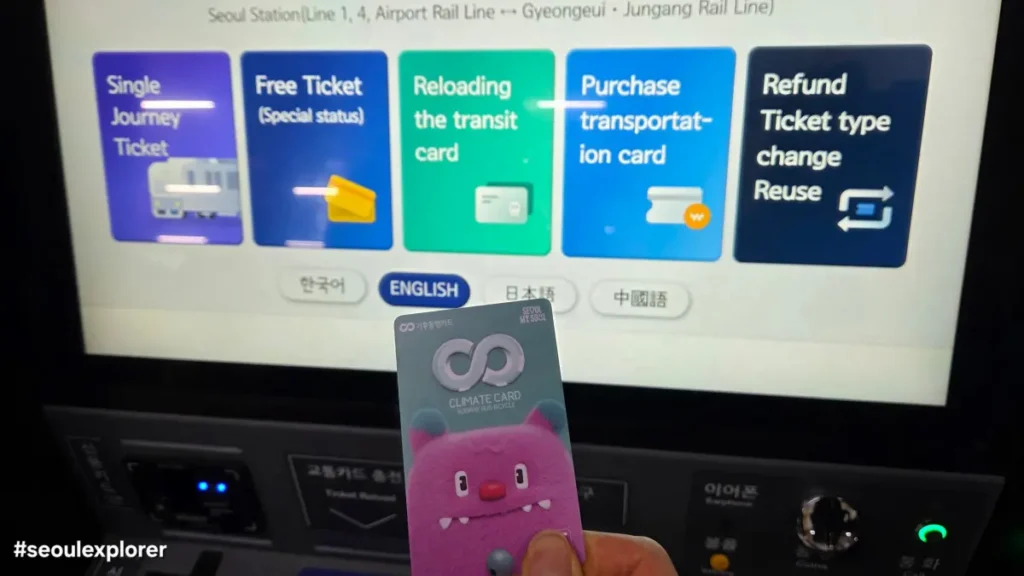
In 2026, the Seoul Metropolitan Government has fully integrated the “Climate Card” for international travelers. Unlike the monthly pass used by locals, the tourist version offers 1, 3, 5, and 7-day options. For a fixed price (starting from around 5,000 KRW for a 1-day pass), you get unlimited access to Seoul’s subways and blue/green buses.
The biggest advantage of the 2026 Climate Card vs Discover Seoul Pass in this category is the inclusion of the “Ttareungi” (Seoul’s public bike system) and the newly launched Han River Bus. If your travel style involves hopping on and off buses in Myeongdong or taking the subway ten times a day to find the best spots for solo dining, the Climate Card is a fantastic choice.
I actually used the 1-day Climate Card last weekend when I had to meet friends in three different districts. The best part was not having to calculate the subway fare every time I hopped on; I just tapped my phone with a grin, knowing I was already saving money after the third ride. For the most up-to-date pricing and a full list of participating bus routes, you can check the [Official Climate Card Guide on Seoul City Website].
2. The Heavyweight: Discover Seoul Pass (DSP)
The Discover Seoul Pass remains the go-to choice for those who want an all-in-one solution. While it is more expensive than the Climate Card, it covers entrance fees to over 50 major attractions including Gyeongbokgung Palace, Namsan Seoul Tower, and even Lotte World. I remember taking my cousins to Lotte World with the DSP last year. While other tourists were fumbling with their wallets at the ticket booth, we just scanned our passes and walked straight in. That feeling of being a “VIP” in my own city was honestly the highlight of the day.
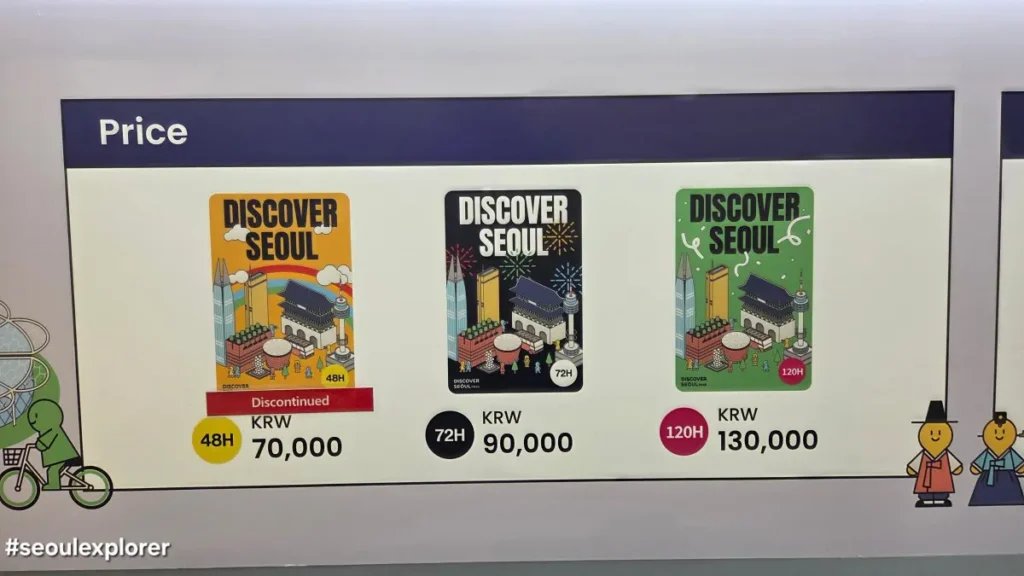
[Updated for 2026: Why the 48-hour Pass is Discontinued]
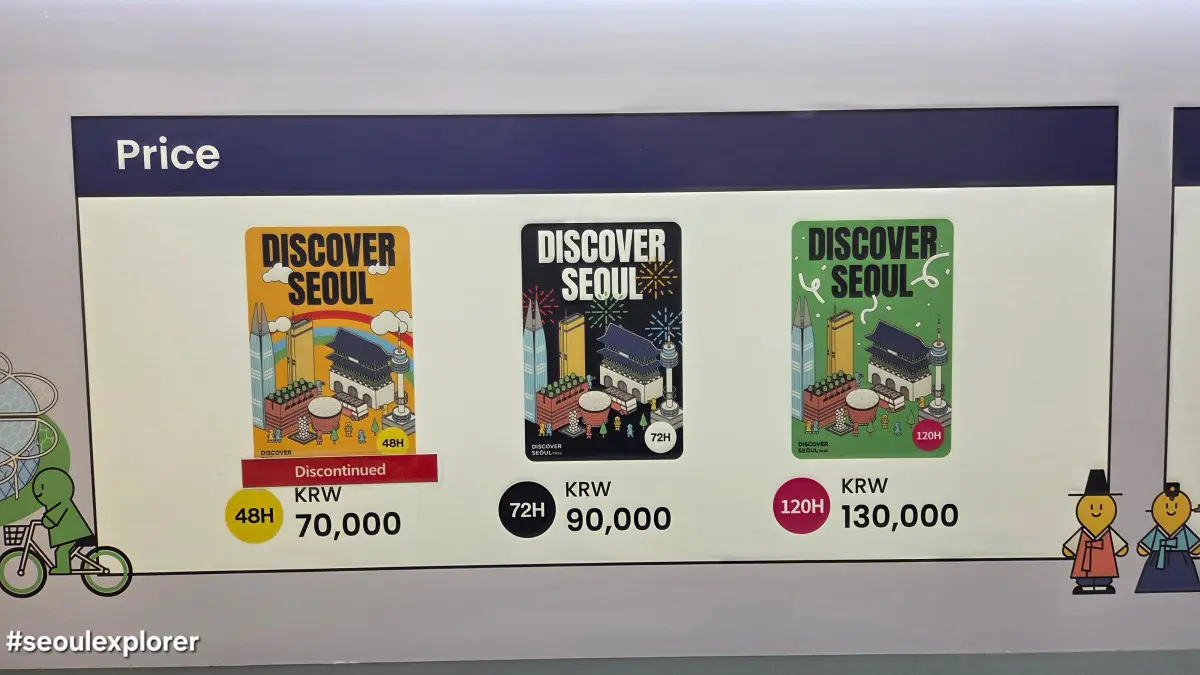
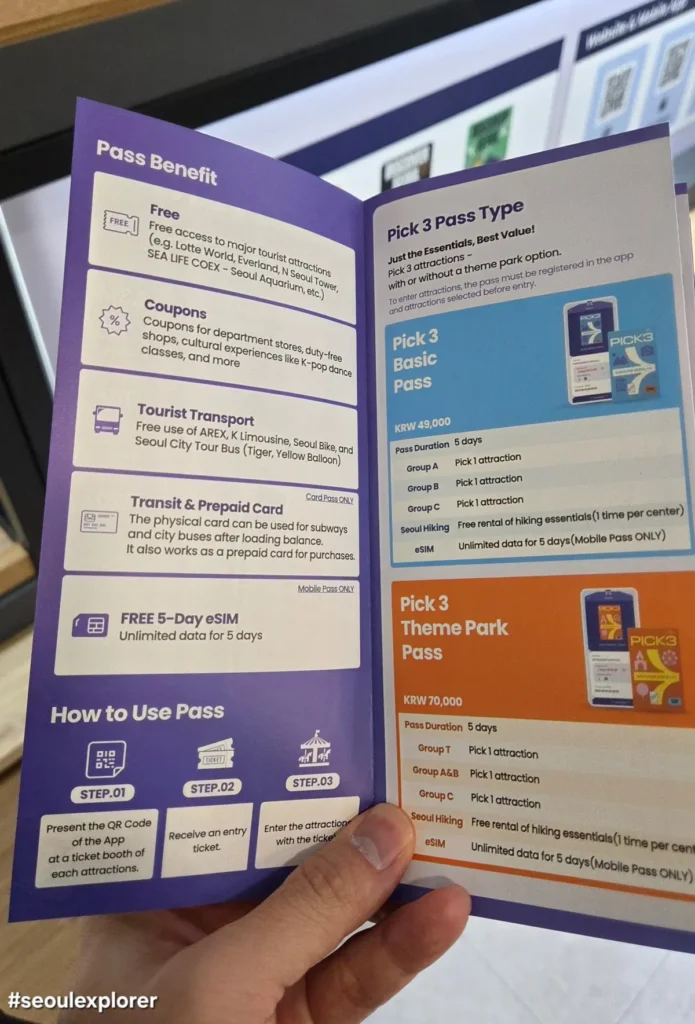
You might notice in current official charts that the traditional 48-hour pass (70,000 KRW) is marked as "discontinued." Don't let this confuse you! In 2026, Seoul has replaced it with the much more flexible Pick 3 Pass system.

For the same 70,000 KRW, you can now get the Pick 3 Theme Park Pass, which allows you to visit 3 major attractions (including high-value spots like Lotte World or Everland) within a generous 5-day window. This is a huge win for travelers who felt rushed by the old 48-hour countdown. If you still want the unlimited entry style, you can opt for the 72-hour (90,000 KRW) or the massive 120-hour (130,000 KRW) passes, which now offer even more partner locations than before.
When comparing the 2026 Climate Card vs Discover Seoul Pass, the DSP’s value shines for those who want to see every landmark.
At the time of writing, the Discover Seoul Pass also includes benefits such as AREX airport railroad access and Seoul Bike (Ttareungi) usage. Since partner benefits can change over time, always check the official Discover Seoul Pass website before purchasing.
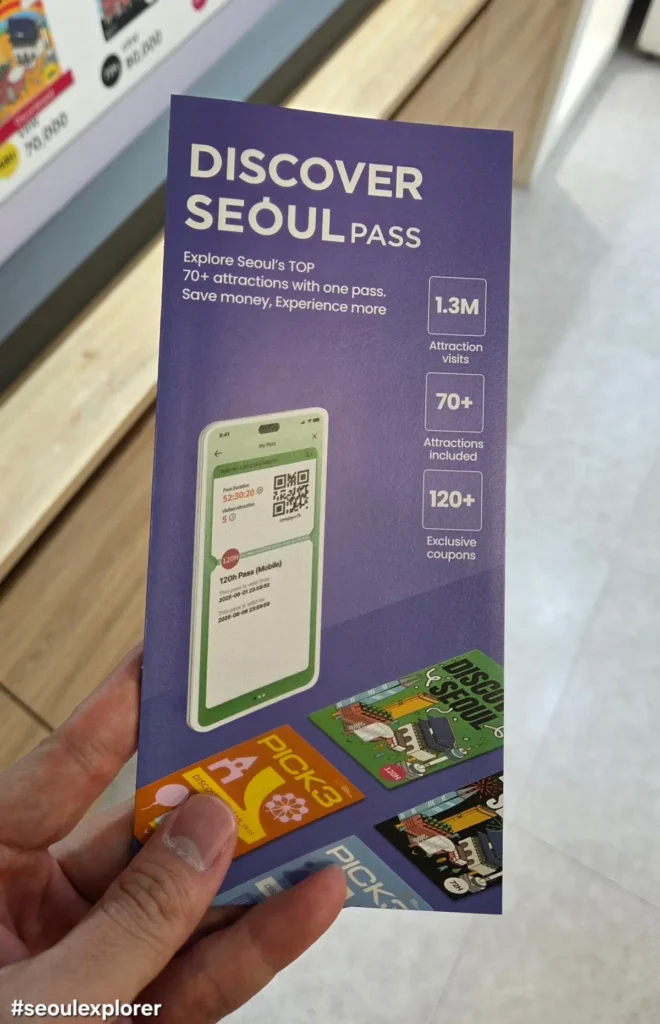
In 2026, the DSP has added even more lifestyle benefits like premium cafe discounts and wellness experiences, making it feel more like a VIP membership than just a transit card. To see if your must-visit spots are included, feel free to browse the current partner list on the [Official Discover Seoul Pass Website].
3. The Real Math: Which One Wins for Your Wallet?
[Quick Comparison: Climate Card vs Discover Seoul Pass]
| Feature | Climate Card | Discover Seoul Pass |
|---|---|---|
| Public Transportation | Unlimited subway & bus rides | Limited transportation benefits |
| Tourist Attractions | Not included | Included |
| Seoul Bike (Ttareungi) | Included | Selected benefits |
| Best For | Exploring neighborhoods | Visiting major attractions |
| Cost | Lower | Higher |
| Flexibility | High | Depends on sightseeing plans |
| Recommended For | Long stays and frequent transit use | Short trips packed with attractions |
To decide between the 2026 Climate Card vs Discover Seoul Pass, you need to look at what you plan to do each day.
- The Transit Lover: If you spend most of your time wandering through Ikseon-dong Hanok Village or visiting free spots like the Han River parks, the 2026 Climate Card is the winner. You can travel as much as you want for less than the price of two lattes a day.
- The Sightseer: If you plan to visit at least two major paid attractions a day, the Discover Seoul Pass pays for itself very quickly. The cost of individual tickets for a Han River Cruise and the N Seoul Tower observation deck already exceeds the price of a 24-hour pass.
One local tip: many travelers don’t realize you can actually use both! Use the DSP for your first 48 hours of intense sightseeing to visit all the paid museums and palaces. Then, switch to a 3-day Climate Card for the rest of your trip to explore local neighborhoods at a slower pace.
4. 2026 Update: Smart Digital Integration
A major change in 2026 is the digital integration. Both passes can now be loaded directly onto your smartphone via NFC, which is a key factor when comparing the 2026 Climate Card vs Discover Seoul Pass. No more worrying about losing a physical card or struggling with the Seoul Subway 15-Minute Rule if you accidentally enter the wrong gate.
Simply tap your phone at supported gates, and your digital pass will be recognized instantly through NFC technology.
This makes traveling around Seoul much more convenient because you no longer need to carry multiple physical cards or worry about losing them during your trip.
I recently tested the NFC mobile tag at a busy station during rush hour, and it worked flawlessly even through my phone case. No more frantic searching for a physical card while a line of busy Seoulites forms behind you! This high-tech convenience makes the 2026 Climate Card vs Discover Seoul Pass choice even more exciting for modern travelers, making moving through the city smoother than ever before.
5. FAQ
Which is cheaper, the Climate Card or the Discover Seoul Pass?
The Climate Card is generally cheaper because it focuses on transportation only. The Discover Seoul Pass includes attraction admission benefits, which increases its overall value for sightseeing-focused travelers.
Can tourists buy a Climate Card?
Yes. Tourist versions are available for short-term visitors and can be purchased at selected subway stations and sales locations.
Is the Discover Seoul Pass worth it?
It can be worth the cost if you plan to visit several paid attractions such as N Seoul Tower, Lotte World, museums, or observation decks during a short period.
Can I use both during the same trip?
Absolutely. Many travelers use a Discover Seoul Pass during their intensive sightseeing days and switch to a Climate Card afterward for everyday transportation.
In the battle of 2026 Climate Card vs Discover Seoul Pass, the best choice depends on your energy. The Climate Card is for the explorer who loves to move around the city constantly, while the Discover Seoul Pass is for the traveler who wants to check every major site off their list. Before you head out, check if your hotel is near a Seoul Subway Elevator to make your arrival easier, and then grab the card that makes the most sense for you.
Whether you choose the neon-green glow of the Climate Card or the sleek pink of the DSP, you are already making a smart move by using Seoul’s world-class infrastructure. Enjoy your 2026 Seoul adventure!
- Seoul Station Guide (2026): Lockers, AREX, KTX & Local Tips for First-Time Visitors
- Seoul Lost and Found Guide (2026): What to Do If You Lose Your Phone, Wallet or Passport
- Seoul Subway Lockers Guide (2026): Prices, Reservation & T-Locker Tips
- Seoul Taxi Guide (2026): How to Take a Taxi, Use Kakao T & Pay Like a Local
- Korea Transportation Tips (2026): 10 Mistakes Every Tourist Should Avoid